
Getting a tax refund feels like a win, but it isn’t extra money. It’s your own money, returned after overpaying taxes throughout the year. What you do with it determines whether it improves your financial position or disappears with nothing to show for it.
For Canadian families, a tax refund is one of the simplest annual opportunities to reduce debt, build stability, and grow long-term wealth, if you use it intentionally.
This article contains affiliate links. We may earn a commission if you open an account, at no cost to you. We only recommend products we’ve researched and trust.
 Taxes
Taxes
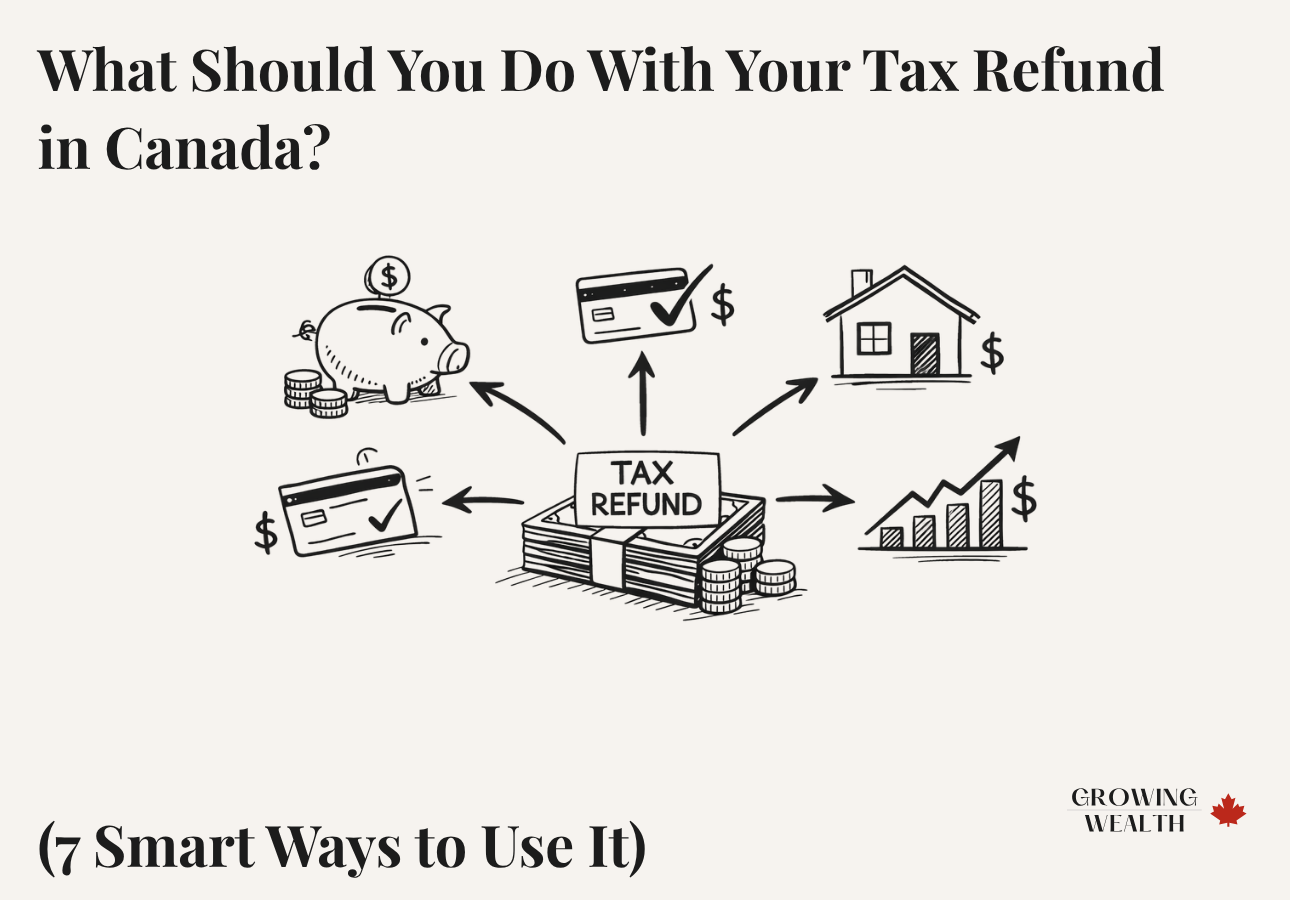
Smart ways to use your tax refund: savings, debt repayment, investing, or mortgage.
In This Article
- Best Ways to Use Your Tax Refund (Quick Answer)
- Start Here: Make Sure Your Taxes Are Done Right
- How to Decide What to Do With Your Tax Refund
- 1. Build or Strengthen Your Emergency Fund
- 2. Pay Off High-Interest Debt
- 3. Use Your RRSP to Reduce Taxes
- 4. Use a TFSA for Flexible, Tax-Free Growth
- 5. Should You Pay Down Your Mortgage Instead?
- 6. HISA vs Investing
- 7. Start or Accelerate Investing
- Should You Adjust Your Tax Withholding?
- How Much Do Canadians Typically Get Back?
- A Simple Strategy You Can Follow
- Where This Fits in Your Financial System
- Common Mistakes to Avoid
- Frequently Asked Questions
Best Ways to Use Your Tax Refund in Canada (Quick Answer)
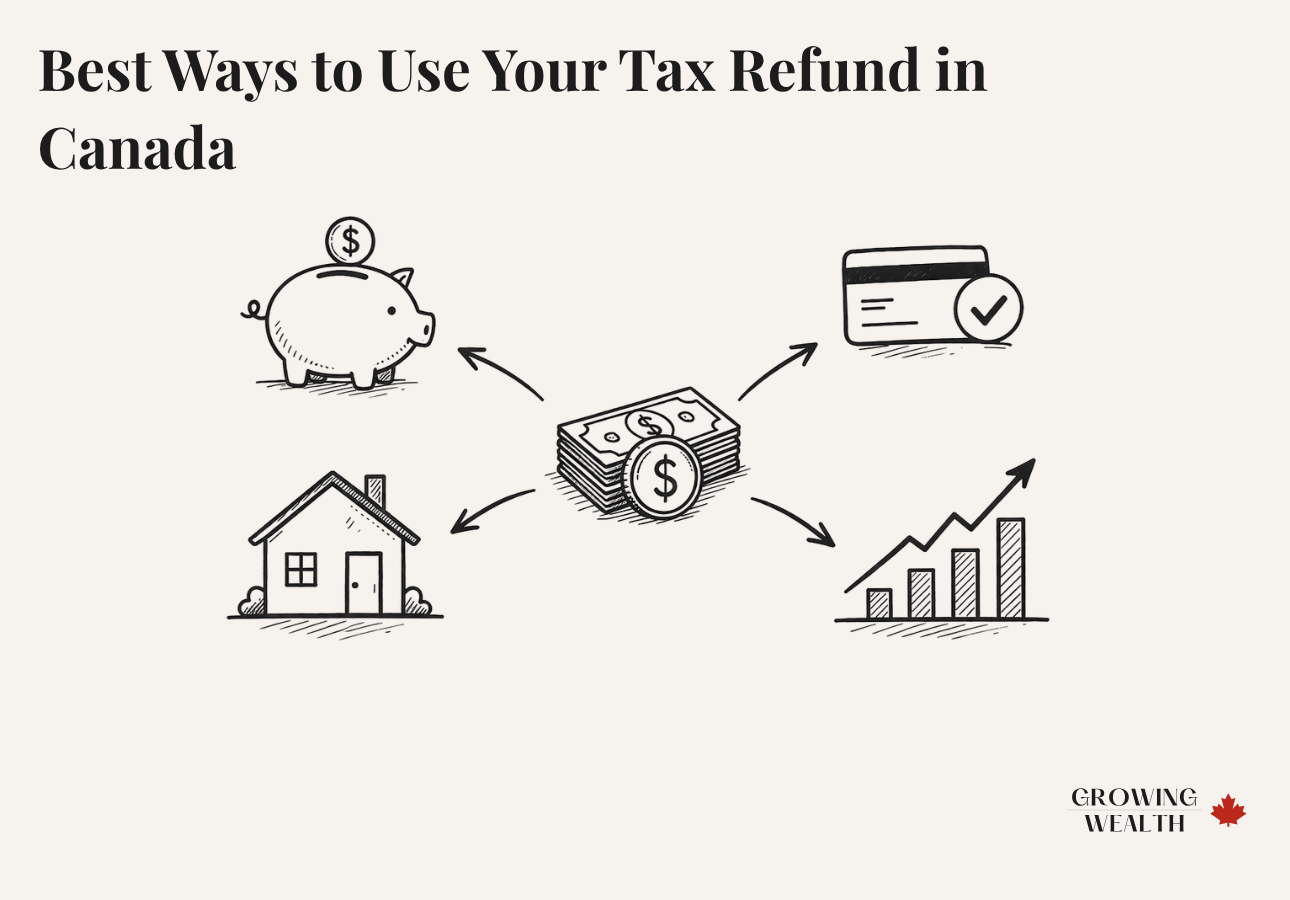
- Build or top up your emergency fund
- Pay off high-interest debt
- Contribute to your RRSP
- Invest through a TFSA
- Pay down your mortgage
- Save in a high-interest savings account
- Invest for long-term growth
Start Here: Make Sure Your Taxes Are Done Right
Before deciding what to do with your refund, make sure you’ve actually optimized your return.
👉 Tax Filing Checklist for Canadians
👉 Complete Guide to Filing Taxes in Canada
For official guidance, refer to the Canada Revenue Agency.
How to Decide What to Do With Your Tax Refund
Use this simple decision order:
| Step | Question | Action |
|---|---|---|
| 1 | Do you have high-interest debt? | Pay it off |
| 2 | Do you have an emergency fund? | Build it |
| 3 | Are you in a higher tax bracket? | Consider RRSP |
| 4 | Do you want flexibility? | Use TFSA |
| 5 | Do you own a home? | Compare mortgage vs investing |
| 6 | Everything covered? | Invest |

Deciding how to use your tax refund can have a lasting impact on your finances.
1 Build or Strengthen Your Emergency Fund
If you don’t have a financial buffer, this is your priority. An emergency fund protects you from job loss, unexpected repairs, and medical or family expenses. Without it, every unexpected cost turns into debt.
How much should you have?
Where should you keep it?
👉 Best High-Interest Savings Accounts in Canada
👉 How to Build an Emergency Fund
A high-interest savings account (HISA) gives you zero market risk, immediate access, and interest earnings.
Keep your money safe, accessible, and earning interest. → Compare High-Interest Savings Accounts (EQ Bank, Tangerine, Wealthsimple Cash)
2 Pay Off High-Interest Debt
If you’re carrying credit card debt, this is the highest-impact move you can make. Typical Canadian credit card rates run 19%–29%.
Paying off debt gives you reduced financial stress, a guaranteed return equal to your interest rate, and immediate cash flow improvement.
3 Use Your RRSP to Reduce Taxes
RRSP contributions lower your taxable income and can generate an additional refund.
👉 RRSP Deadline Guide for Canadians
👉 RRSP vs TFSA: Which Should You Choose?
For official limits and rules, see the Canada Revenue Agency website.
RRSP vs TFSA (Canada)
| Feature | RRSP | TFSA |
|---|---|---|
| Tax on contributions | Tax-deductible | Not deductible |
| Tax on growth | Tax-deferred | Tax-free |
| Withdrawals | Taxed as income | Tax-free |
| Best for | Higher income earners | Flexibility |
If you’re a first-time home buyer, your refund could also go into an FHSA. See how all three accounts compare in our FHSA vs TFSA vs RRSP guide.
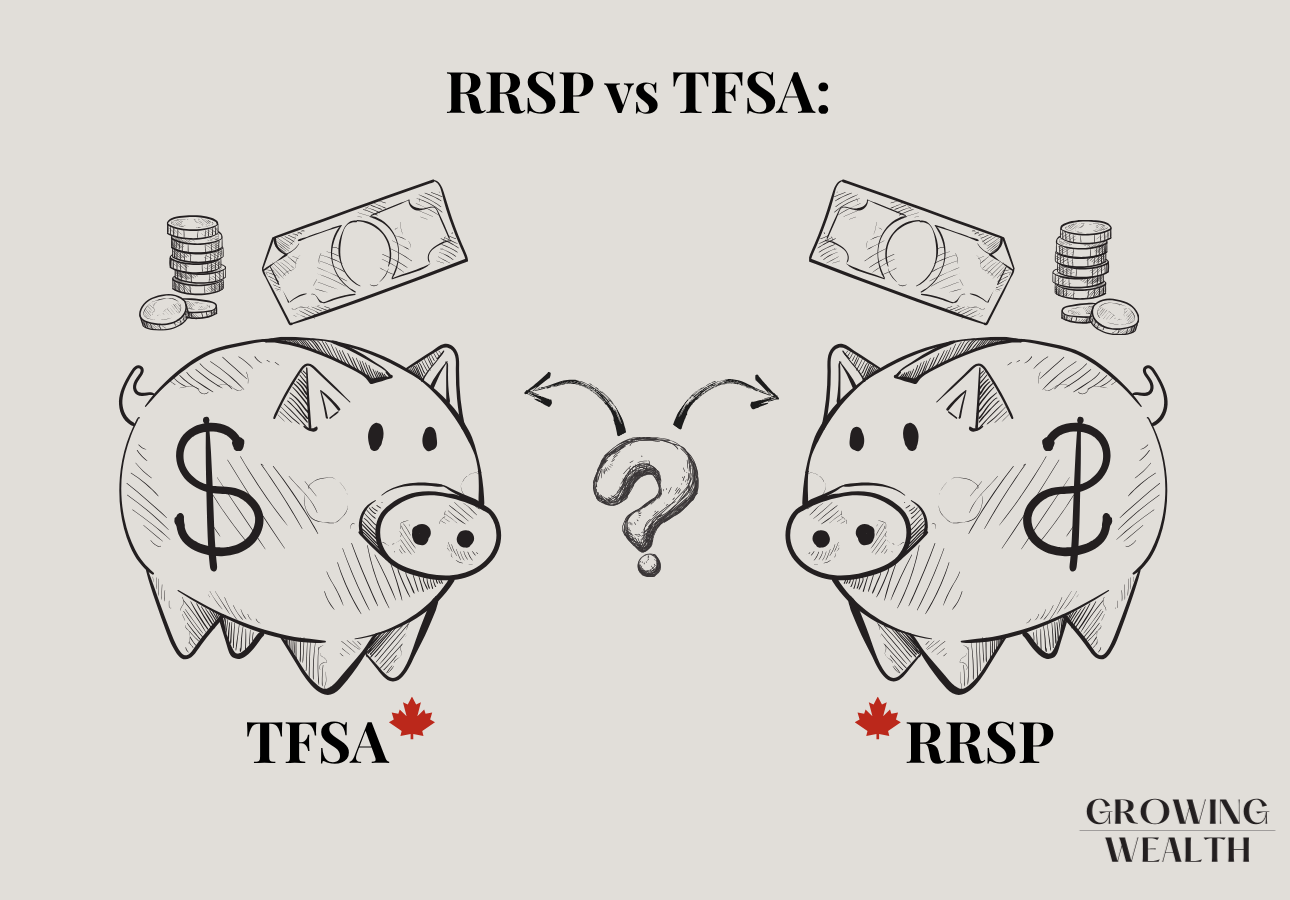
TFSA vs RRSP: choosing the right account depends on your goals and income.
Reduce your taxes and grow your retirement savings. → Compare RRSP Accounts (Questrade, Wealthsimple)
→ How to Reduce Your Tax Bill
4 Use a TFSA for Flexible, Tax-Free Growth
A TFSA allows your money to grow without being taxed. Benefits include tax-free growth, flexible withdrawals, and no tax on gains.
Read the official rules of the TFSA on the CRA website.
Take advantage of tax-free investing with a TFSA. → Compare TFSA Accounts (Wealthsimple, Questrade)
5 Should You Pay Down Your Mortgage Instead?
If you own a home, your tax refund can also go toward your mortgage. Paying down your mortgage reduces interest costs, improves long-term cash flow, and provides a guaranteed return.
👉 Should You Pay Down Your Mortgage or Invest in Canada?
| Factor | Mortgage | Investing |
|---|---|---|
| Return | Guaranteed | Variable |
| Risk | None | Market risk |
| Liquidity | Low | High |
6 HISA vs Investing (Where Should Your Money Go?)
| Feature | HISA | Investing |
|---|---|---|
| Risk | None | Market risk |
| Returns | Low | Higher |
| Access | Immediate | Varies |
Compare top Canadian savings accounts and current rates. → View Top Savings Accounts (EQ Bank, Tangerine, Wealthsimple Cash)
7 Start or Accelerate Investing
Once your financial base is strong, investing is where your refund creates long-term impact.
👉 How to Start Investing in Canada
If you’re investing through an RRSP, it’s also worth knowing which investments belong inside it, since not all assets benefit equally from tax deferral.
Where to invest
Common options include robo-advisors (Wealthsimple) and DIY investing (Questrade). Focus on long-term consistency, low fees, and diversification.
Turn your refund into long-term wealth. → Compare Investment Platforms (Wealthsimple, Questrade)
→ Start Investing Today
Example: How a Family Uses a $3,000 Tax Refund
| Category | Amount | Purpose |
|---|---|---|
| Emergency fund | $1,500 | Stability |
| TFSA investment | $1,000 | Growth |
| Family spending | $500 | Lifestyle balance |
Should You Adjust Your Tax Withholding?
You can update your TD1 form through your employer or download it directly from the Canada Revenue Agency.
How Much Do Canadians Typically Get Back?
According to the Canada Revenue Agency, many Canadians receive between $1,000 and $3,000 or more. Families often receive more due to credits and deductions.
A Simple Strategy You Can Follow
The 50 / 30 / 20 Approach
| Allocation | Use |
|---|---|
| 50% | Emergency fund + debt |
| 30% | Investing (TFSA/RRSP) |
| 20% | Family/lifestyle |
Where This Fits in Your Financial System
👉 The Complete Family Finance System for Canadians
Your tax refund is not a one-time decision. It’s part of a system. Used consistently each year, it compounds.
Common Mistakes to Avoid
- Treating it like free money
- Investing before fixing fundamentals
- Leaving it unused
- Spending without a plan
The Bottom Line
Your tax refund is your own money coming back to you, not a bonus. Treat it with the same intention you’d apply to any other paycheque: fix the fundamentals first.
If you’re carrying high-interest debt, pay it down before anything else. If you don’t have an emergency fund, build one next. Only after those are covered should you turn to RRSP contributions, TFSA growth, or mortgage prepayment, in whichever order matches your tax bracket and goals.
Used the same way every year, a tax refund stops being a windfall and becomes a reliable part of how your family builds wealth.Frequently Asked Questions
Only after building an emergency fund and eliminating high-interest debt. Investing before those fundamentals are in place means you may need to sell investments at a bad time if an unexpected expense hits.
RRSP is better for tax reduction, especially if you’re in a higher tax bracket now than you expect to be in retirement. TFSA is better for flexibility, since withdrawals are tax-free and don’t affect income-tested benefits.
If your interest rate is above roughly 7–8%, paying down debt is usually the better choice. That return is guaranteed, while investment returns are not.
A high-interest savings account. It keeps your refund fully liquid and earning interest with no market risk while you decide on a longer-term plan.
No. A tax refund is a return of your own money that you overpaid during the year, not income, so it isn’t taxed. Any interest or investment gains you earn after putting the refund to work are taxed normally.
Yes, and for most families this is the practical approach. A simple split, like the 50/30/20 approach above, lets you make progress on debt or savings while still building toward long-term goals.
Want to turn what you’ve just learned into lasting results? Read How Income Tax Works in Canada — understand exactly how your refund was calculated so you can plan next year’s even better.