
By:
Growing Wealth
Published:
For most Canadian families, the mortgage is the single largest financial commitment they will ever take on.
Yet many homebuyers spend weeks comparing interest rates while spending very little time understanding one of the most important decisions in the entire process:
Should you choose a fixed or variable mortgage in Canada?
This choice affects:
- Your monthly housing payments
- Your exposure to rising interest rates
- Your long-term interest costs
- Your financial stability during economic shocks
The question has become even more important in recent years.
During the pandemic, mortgage rates fell to historic lows. Many Canadians chose variable-rate mortgages, expecting low rates to last for years.
Then interest rates rose faster than at any point in decades.
Many households saw payments rise dramatically. Others hit trigger rates, where their payments no longer covered interest.
For families who believed variable mortgages were always cheaper, the experience was a wake-up call.
So which option is actually better?
The answer depends on risk tolerance, financial flexibility, and long-term financial planning.
In this guide we’ll explain:
- How fixed and variable mortgages work in Canada
- What happened during the recent rate spike
- Long-term historical data comparing mortgage types
- Which option tends to work best for families
- How to decide which mortgage structure fits your situation
If you’re new to mortgages, start with our guide to How Mortgages Work in Canada, part of our broader homeownership planning series.
If you’re still in the savings stage, our guide on how to build a down payment with the FHSA and HBP covers how first-time buyers can maximize their savings before they get to this decision.
Also keep in mind that your credit score directly affects the mortgage rate you’re offered. See What Is a Good Credit Score in Canada? to understand how credit affects mortgage qualification and the interest rates available to you.
Fixed vs Variable Mortgage Canada: Quick Comparison
| Feature | Fixed Mortgage | Variable Mortgage |
|---|---|---|
| Interest rate | Locked for the term | Moves with prime rate |
| Monthly payments | Stable | May change |
| Protection from rising rates | Yes | No |
| Benefit when rates fall | No | Yes |
| Penalty for breaking mortgage | Often higher | Usually lower |
| Risk level | Lower | Higher |
| Long-term average cost | Often slightly higher | Historically lower |
Both options can make sense depending on your financial situation.
The key difference comes down to stability versus flexibility.
What Is a Fixed Mortgage?
A fixed-rate mortgage locks in your interest rate for the entire mortgage term.
In Canada, the most common mortgage term is five years, although lenders also offer terms ranging from 1 to 10 years.
When you sign a fixed mortgage:
- Your interest rate remains the same
- Your monthly payment stays the same
- Your amortization schedule remains stable
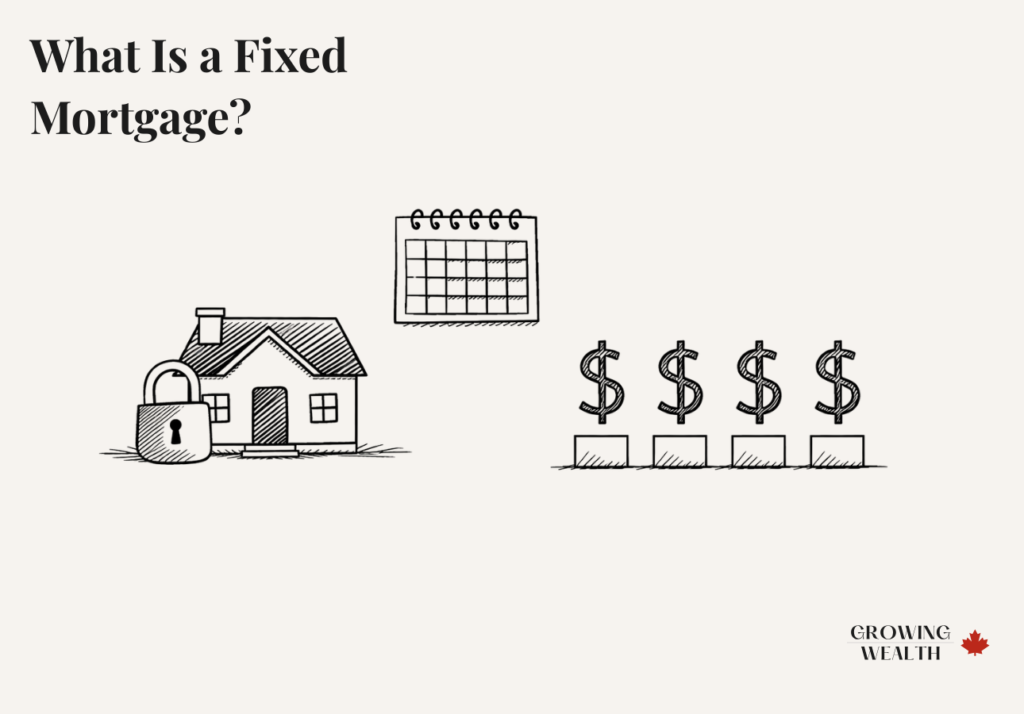
Even if interest rates rise dramatically, your payment does not change during the term.
Example
If you borrow $500,000 at 4.5% for a 5-year fixed mortgage, your monthly payment remains unchanged for five years regardless of what happens to interest rates.
For many families, this stability makes financial planning easier.
Advantages of Fixed Mortgages
Predictable Monthly Payments
The biggest benefit is certainty.
Your housing costs remain stable, which helps families manage household budgets and avoid sudden financial stress.
This can be especially important for families balancing expenses such as childcare, groceries, and transportation.
Protection From Rising Interest Rates
If interest rates increase, fixed-rate borrowers are protected.
This protection became very valuable during the recent rate hikes by the Bank of Canada.
Between 2022 and 2023, the central bank raised its policy rate from 0.25% to 5% in response to rising inflation.
Many variable-rate mortgage holders saw their payments increase dramatically during this period.
Fixed-rate borrowers were insulated from those increases during their term.
Psychological Stability
Financial decisions are not purely mathematical.
Many families value the peace of mind that comes from knowing their largest monthly expense will not suddenly change.
Disadvantages of Fixed Mortgages
Higher Initial Interest Rates
Fixed mortgages often start with slightly higher rates than variable mortgages.
Lenders charge a premium for providing long-term stability.
Breaking a fixed mortgage early can be costly.
Many lenders charge Interest Rate Differential (IRD) penalties, which can amount to thousands of dollars.
For homeowners who may sell or refinance before their term ends, this lack of flexibility can matter.
What Is a Variable Mortgage?
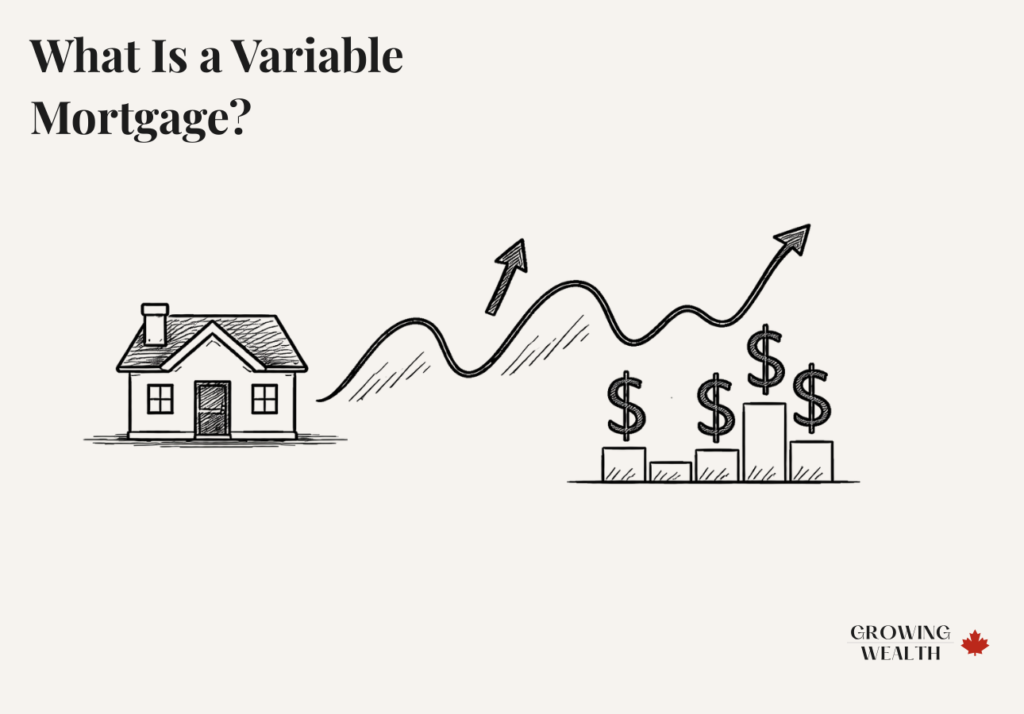
A variable-rate mortgage fluctuates with the lender’s prime rate, which is influenced by policy decisions from the Bank of Canada.
When the Bank of Canada changes interest rates:
- Your mortgage interest rate adjusts
- Your interest costs change
- Your payment may change depending on the mortgage structure
Variable mortgages typically come in two forms.
Adjustable Rate Mortgage
Your monthly payment changes whenever interest rates change.
Variable Mortgage With Fixed Payments
Your payment remains the same until the mortgage reaches a trigger rate.
At that point, your lender may require a higher payment or changes to the mortgage terms.
Many Canadian homeowners encountered trigger rates during the recent rate cycle.
Advantages of Variable Mortgages
Historically Lower Interest Costs
Over long periods, variable mortgages have often been cheaper than fixed mortgages.
Research conducted by Canadian finance professor Moshe Milevsky has found that variable-rate mortgages historically outperform fixed-rate mortgages roughly two-thirds of the time.
Why?
Because lenders build a risk premium into fixed mortgage rates.
Borrowers willing to accept rate fluctuations may benefit from lower average costs.
Lower Penalties
Variable mortgages are typically easier to break.
The penalty is often limited to three months of interest, which can be much smaller than fixed mortgage penalties.
This flexibility is valuable for homeowners who may move or refinance.
Benefit When Interest Rates Fall
If rates decline, variable mortgage holders benefit automatically without needing to refinance.
Disadvantages of Variable Mortgages
Payment Volatility
Variable mortgage payments can increase when interest rates rise.
This can place pressure on household budgets.
Financial Stress During Rate Cycles
Even if variable mortgages win on average over long periods, the volatility can cause significant stress when rates increase quickly.
The recent rate cycle demonstrated how quickly housing costs can change.
Risk of Trigger Rates
When payments no longer cover interest costs, borrowers may hit a trigger rate, requiring increased payments or restructuring of the mortgage.
What Happened to Variable Mortgages During the Pandemic Rate Spike?
During 2020 and 2021, Canada experienced historically low mortgage rates.
Variable rates below 1.5% were common.
Many homebuyers assumed these conditions would continue.
However, global inflation surged following pandemic stimulus and supply chain disruptions.
According to Statistics Canada, inflation rose to multi-decade highs, prompting aggressive rate increases.
As a result:
- Mortgage payments rose sharply for variable borrowers
- Many homeowners reached trigger rates
- Some payments increased by hundreds or even thousands of dollars per month
This period dramatically reshaped how Canadians think about mortgage risk.
Historical Data: Fixed vs Variable Mortgage Performance
Despite recent experiences, long-term data still shows an important trend.
Over several decades, variable-rate mortgages have often produced lower average borrowing costs.
However, these averages hide significant short-term volatility.
Mortgage terms in Canada typically last 3 to 5 years, not decades.
If your mortgage term occurs during a rising interest-rate cycle, the savings advantage of variable mortgages can disappear quickly.
For example, periods such as the early 1980s and the recent post-pandemic rate spike show how rapidly borrowing costs can increase when central banks raise interest rates.
This is why the decision should consider risk tolerance, not just historical averages.
How the Mortgage Stress Test Affects Your Decision
Canada has rules designed to protect borrowers from rising interest rates.
Federally regulated lenders must apply the mortgage stress test established by the Office of the Superintendent of Financial Institutions.
Borrowers must qualify at the higher of:
- The contract mortgage rate plus 2%, or
- The official minimum qualifying rate
This rule ensures borrowers can still afford their mortgage if interest rates rise.
While the stress test reduces risk, it does not eliminate the payment volatility associated with variable mortgages.
What Happens When Interest Rates Rise?
To understand mortgage risk, consider a simplified example.
A $500,000 mortgage amortized over 25 years:
| Interest Rate | Approx Monthly Payment |
|---|---|
| 2% | ~$2,120 |
| 4% | ~$2,630 |
| 6% | ~$3,220 |
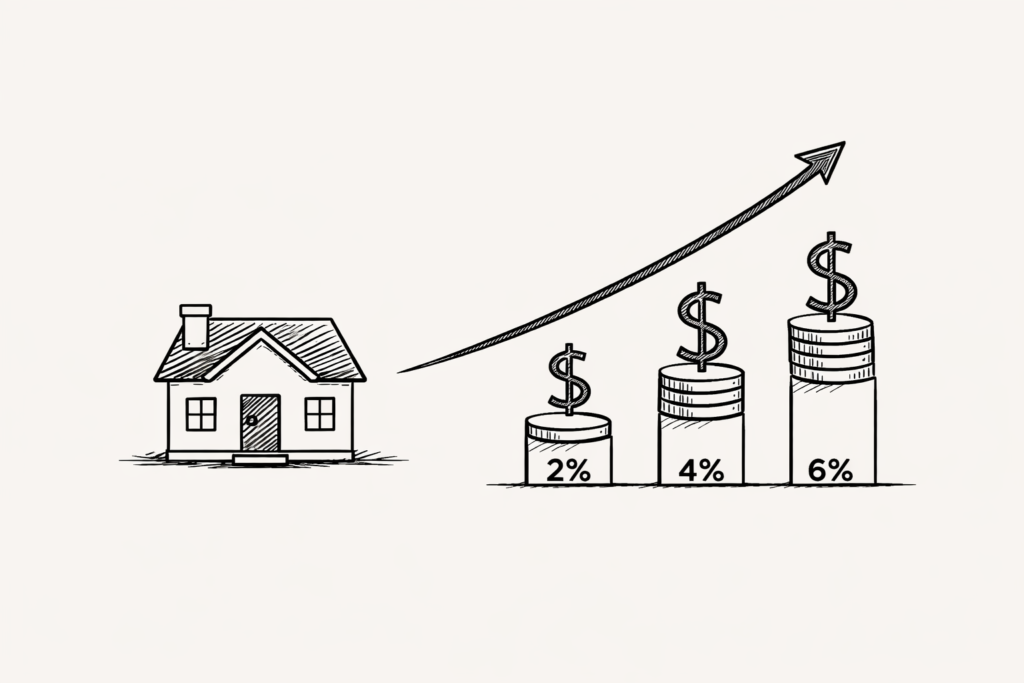
A rapid increase in rates can raise monthly payments by over $1,000 per month.
For households with tight budgets, this type of increase can significantly affect financial stability.
How to Decide Between Fixed and Variable Mortgages
The best mortgage choice depends on your financial situation.
Fixed Mortgages May Be Better If
- Your budget is tight
- You want stable monthly payments
- Interest rates are relatively low
- You prefer predictable costs
Variable Mortgages May Be Better If
- You have strong financial flexibility
- You can tolerate payment volatility
- You expect interest rates to decline
- You may sell or refinance early
For many households, the decision comes down to risk tolerance rather than mathematical optimization.
Mortgage decisions should also be considered alongside your broader financial plan, including savings, investing, and debt management.
For a broader strategy, see our guide to Building a Family Finance System for Canadians.
The Bottom Line
Both fixed and variable mortgages have advantages.
Fixed mortgages prioritize stability and predictability.
Variable mortgages prioritize flexibility and potential long-term savings.
The recent rate cycle reminded Canadians that mortgages are not simply mathematical decisions.
They are risk management decisions.
For many families, the stability of a fixed mortgage provides valuable peace of mind.
For others with greater financial flexibility, variable mortgages may still offer long-term advantages.
The key is choosing the option that fits your financial resilience and long-term plan, rather than simply chasing the lowest rate.
Frequently Asked Questions
Is it better to get a fixed or variable mortgage in Canada?
It depends on your financial situation. Fixed mortgages offer stable payments and protection from rising rates, while variable mortgages may provide lower costs over long periods but come with payment volatility.
Why were variable mortgage holders hit so hard in 2022–2023?
The Bank of Canada rapidly raised interest rates to control inflation. Variable mortgage rates move with these increases, causing payments and interest costs to rise quickly.
Do most Canadians choose fixed or variable mortgages?
Historically, most Canadian homeowners have chosen fixed mortgages, particularly the 5-year fixed term, because of payment stability.
What is a trigger rate?
A trigger rate occurs when your mortgage payment no longer covers the interest portion of the loan. When this happens, lenders may require higher payments or changes to the mortgage structure.
Can you switch from variable to fixed?
Many lenders allow borrowers to convert a variable mortgage into a fixed mortgage during the term, although the new rate will reflect current market conditions.
If you’re planning to buy a home or refinance your mortgage, you may also want to read:
- How Mortgages Work in Canada
- How Much House Can You Afford in Canada?
- First-Time Home Buyer Guide Canada (coming soon)
- Mortgage Renewal Strategy in Canada
These guides are part of our Home Ownership and Mortgage Planning series for Canadian families.
Affiliate Disclosure
💡 GrowingWealth.ca is supported by readers. Some of the links in this article are affiliate links, which means we may earn a small commission if you open an account or make a purchase — at no extra cost to you. We only recommend products and services we personally use, trust, or believe provide genuine value to Canadians. Our reviews and comparisons are always independent and objective.