
This article contains affiliate links. We may earn a commission if you open an account — at no cost to you. We only recommend products we’ve researched and trust.
 Credit
Every site seems to have a different number for what counts as “good” credit in Canada — 650, 660, 670, 700. That inconsistency isn’t a mistake. It comes from real differences in scoring models, and most articles gloss over which one they’re actually quoting. Here’s the answer straight from Equifax Canada’s own published ranges, what the average Canadian score actually is, and exactly what score you need for the things that matter — a mortgage, a credit card, the best interest rate.
In This Article
What Counts as a Good Credit Score in Canada?
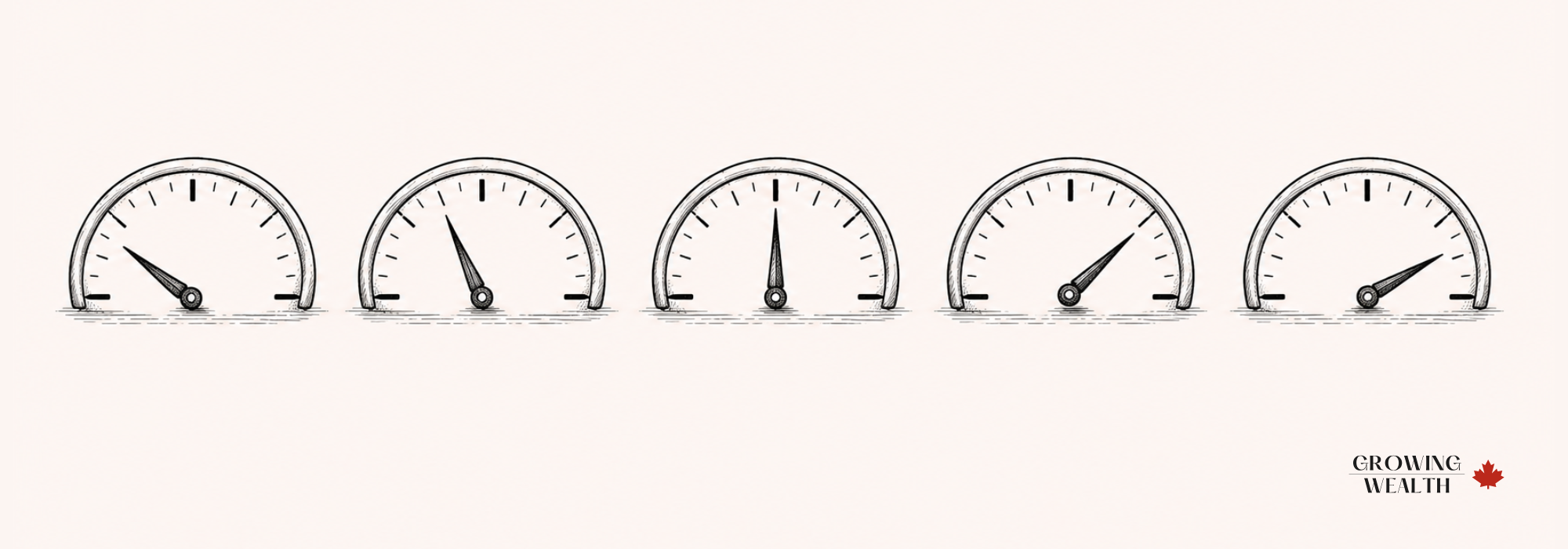
Canadian credit scores run from 300 to 900, calculated by two bureaus — Equifax and TransUnion — using their own proprietary models. Because lenders most often pull Equifax, its own published ranges are the closest thing Canada has to an official standard:
| Range | Rating | What it means for you |
|---|---|---|
| 760–900 | Excellent | Best rates on everything — mortgages, cards, insurance. Lenders see you as essentially no risk. |
| 725–759 | Very Good | Strong approval odds and competitive rates across the board. |
| 660–724 | Good | Qualifies for standard products at mainstream lenders — the practical threshold most Canadians aim for. |
| 560–659 | Fair | Approvals get harder and rates climb. Some lenders treat this as subprime. |
| 300–559 | Poor | Limited access to mainstream credit — expect higher rates or the need for a secured product. |
A quick note on why the number you see can vary: TransUnion’s model puts “good” slightly differently (closer to 661–780), and your own score can differ by 10–30 points between the two bureaus depending on which lenders report to which. Neither is wrong — they’re just different yardsticks measuring the same behaviour.
What’s the Average Credit Score in Canada?
This is where most articles get sloppy, because two credible sources disagree by nearly 80 points. Borrowell’s 2026 data — pulled from millions of Equifax-based user scores — puts the average Canadian at 679, squarely in the “Good” range. FICO’s bankcard benchmarking data, using a different scoring methodology, puts the national average closer to 760, in “Very Good” territory.
Both are accurate for what they measure. Borrowell’s figure reflects real, self-reported Equifax scores across a broad user base — likely the closest match to what you’d see checking your own score today. FICO’s number comes from a model with different weighting and a narrower sample skewed toward existing bank-card holders, who tend to already have healthier files. The practical takeaway: if your score sits anywhere from the high 600s to low 700s, you are at or above the typical Canadian — regardless of which “average” a headline is quoting.
Borrowell says 679. FICO says 760. Either way, high 600s to low 700s puts you at or above the typical Canadian.
What Credit Score Do You Actually Need?
“Good” is a useful label, but the number that matters depends on what you’re trying to do. Here’s where the real thresholds sit:
| Product or goal | Score needed |
|---|---|
| CMHC-insured mortgage (minimum down payment) | 600 |
| Approval at most mainstream lenders (A-lender floor) | 660–680 |
| Best available mortgage rates | 720+ |
| Most standard credit cards | 660+ |
| Premium travel and cashback cards | 760+ |
Note that a credit score is only one input lenders use — for a mortgage specifically, you’ll also need to pass the federal stress test, which qualifies you at the higher of your contract rate plus 2% or 5.25%, regardless of how strong your score is.
What a Low Score Really Costs You
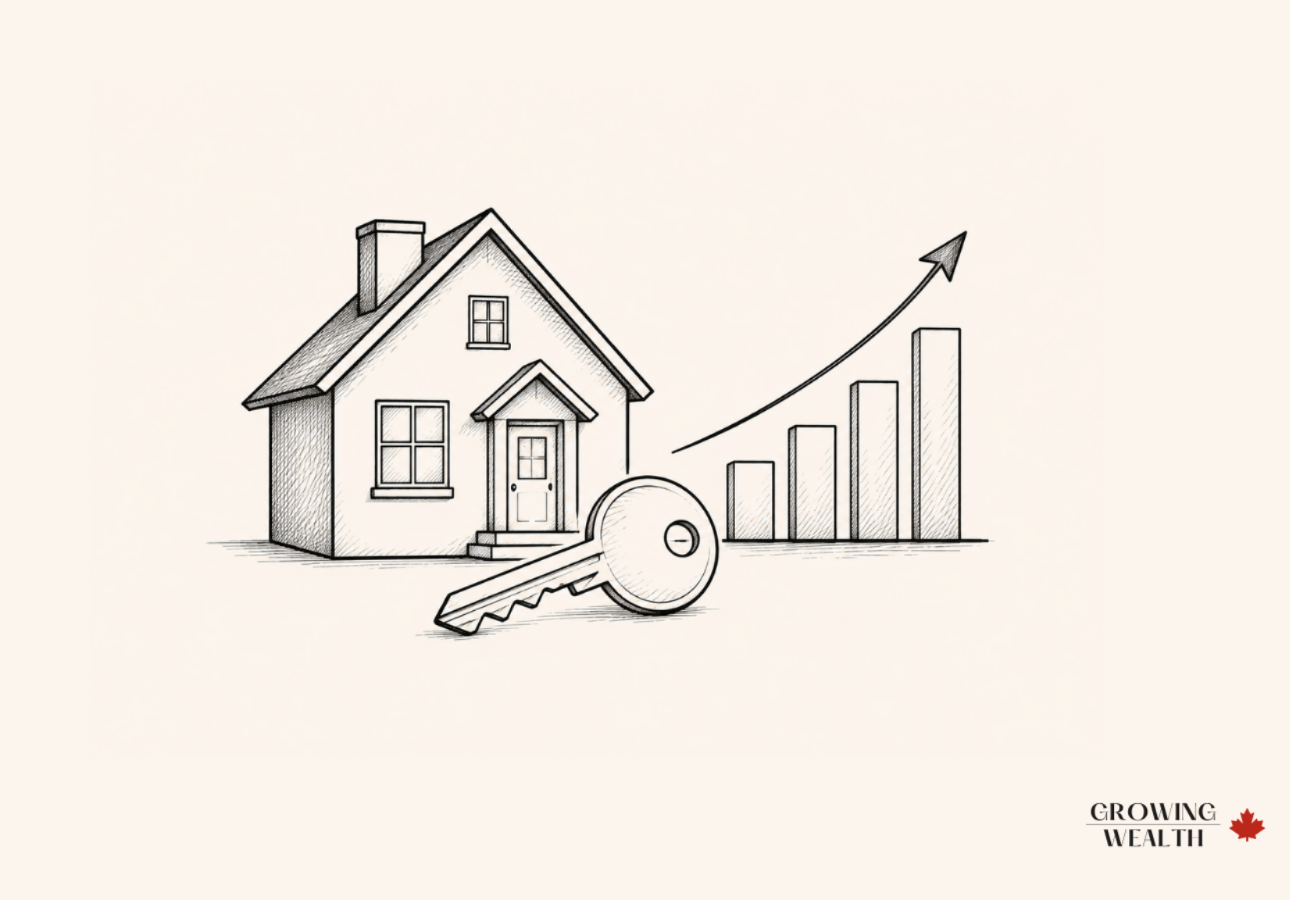
The gap between “Fair” and “Good” isn’t just a label — it shows up in real dollars. Consider two Canadians applying for the same $500,000 mortgage. One has a 660 score and qualifies through a standard A-lender at typical market pricing. The other has a 610 score and gets routed to a B-lender or alternative product, often carrying a rate 1–2 percentage points higher. On a 5-year term, that gap alone can add tens of thousands of dollars in interest over the life of the mortgage — before accounting for the higher CMHC insurance premium a weaker file can also trigger.
The same math applies on a smaller scale to credit cards: below 660, you’re likely to be offered secured or entry-level products with higher interest rates and lower limits, rather than the no-fee or rewards cards built for stronger files.
660 matters more than any other number in this article. It’s the point where you stop being treated as a risk to manage and start being treated as a customer lenders compete for.
What Determines Your Score
Five factors make up your Equifax score, and two of them do most of the work:
| Factor | Weight | What it means |
|---|---|---|
| Payment history | 35% | On-time payments, full stop. One missed payment can sit on your report for years. |
| Credit utilization | 30% | The share of your available credit you’re using. Keep it under 30%. |
| Length of history | 15% | Older accounts help — don’t close your oldest card. |
| Credit mix | 10% | A blend of revolving credit (cards) and installment credit (loans) helps marginally. |
| New inquiries | 10% | Each hard pull can ding your score slightly — space out applications. |
For the full breakdown of how each factor works and how to move the needle fastest, see our complete guide to improving your credit score.
How to Check Your Credit Score for Free
You don’t need to pay to know where you stand:
Borrowell
Free ongoing Equifax score and report, updated regularly. No credit card required to sign up.
Credit Karma
Free ongoing TransUnion-based score and monitoring.
Equifax Canada
Free mailed or phone-requested report annually. Online score access typically requires a paid product.
TransUnion Canada
Same free annual report option, available by mail or phone.
Your Bank’s App
Many federally regulated banks now show a free score pulled from one bureau directly in online banking.
Checking any of these is a soft inquiry — it never lowers your score, regardless of how often you look. If your Equifax and TransUnion scores differ by more than 30–40 points, it’s worth pulling both full reports to check for an error or an account reporting to only one bureau.
Does Your Score Vary by Age or Province?
Yes, though not because of where you live or how old you are directly — it’s a byproduct of how the five scoring factors accumulate. Younger Canadians (18–25) typically sit in the 550–630 range simply because their files are thin: there hasn’t been enough time to build payment history or account age, both of which carry real weight. By the mid-40s, average scores climb into the 700s as accounts age and repayment history lengthens. Provincial averages track closely with regional debt loads — provinces carrying more non-mortgage consumer debt tend to skew slightly lower on average, though the gap between provinces is modest compared to the gap between age groups.
The practical implication: if you’re in your 20s with a lower score, that’s normal and largely structural, not a reflection of poor money management. The fastest lever you have isn’t age — it’s the two heaviest-weighted factors: payment history and utilization.
How to Build or Rebuild Credit Fast
If your score is below 660 — or you’re newer to credit and don’t have a file yet — a secured credit card is the fastest, lowest-risk way to start building a track record lenders trust. You put down a refundable security deposit that sets your credit limit, use the card like normal, and your payment history reports to the bureaus like any other card.
No credit score required to apply, reports to both Equifax and TransUnion, and lets you track your score directly in the Neo app. You can be considered for a higher credit limit in as little as 3 months — and you earn cashback on everyday spending the whole time, so it’s not a stripped-down “starter” card.
See Secured Neo Mastercard →$9.99/month secured card fee, with no deposit-balance waiver — plus up to 15% boosted cashback at thousands of partners across Canada. Neo Financial is not a bank. Requires refundable security funds to set your credit limit. Cashback and terms subject to change — see the Neo app for full details.
The Bottom Line
If you take one number away from this article, make it 660. That’s Equifax’s real threshold for “Good” in Canada, and it’s the point where mortgage lenders, credit card issuers, and landlords start treating you as low-risk rather than someone to scrutinize.
The “average Canadian score” you see quoted online will vary depending on the source — anywhere from 679 to 760 — but both numbers agree on the same thing: most Canadians already sit at or above Good. If you’re below it, the fastest lever isn’t a secret hack. It’s paying on time, every time, and keeping your utilization under 30%.
If your score needs rebuilding, start with a secured card that reports to both bureaus — it’s the most reliable way to move up a tier within months, not years.Frequently Asked Questions
Yes. A 700 falls in Equifax’s “Good” range (660–724), just under the “Very Good” cutoff of 725. At 700, you’ll generally qualify for standard mortgages, credit cards, and loans at competitive rates, though the very best pricing is typically reserved for 720+.
Not quite — 650 falls in the “Fair” range (560–659), just below the 660 threshold most lenders treat as “Good.” You can still access credit at 650, but expect fewer product options and higher interest rates than someone at 660+.
Because Equifax and TransUnion each use their own proprietary scoring models, and some sites quote U.S. FICO ranges that don’t map directly onto Canada’s 300–900 scale. Always check whether a source is citing Equifax’s Canadian ranges specifically — that’s the standard most Canadian lenders reference.
No. Checking your own score is a “soft inquiry” and has zero impact. Only “hard inquiries” — when a lender checks your credit because you’ve applied for something — can cause a small, temporary dip.
Most Canadians moving from Fair (560–659) to Good (660+) see it happen within 6–12 months of consistent on-time payments and keeping utilization under 30%. Reaching Very Good or Excellent typically takes longer, since length of credit history plays a bigger role at that level.
No. Most lenders treat any score above roughly 760 identically when pricing risk. Chasing a perfect 900 has little practical benefit once you’re solidly in the Excellent range.
Newcomers typically start with no Canadian credit file, since foreign credit history doesn’t automatically transfer. Some newcomer programs now allow limited data porting, but the most reliable path is opening a secured credit card and using it responsibly — most newcomers can build a workable file within 6–12 months.
Want the full picture on how credit scores work in Canada? Read Credit Scores in Canada: Complete Guide — it covers everything from how scores are calculated to long-term strategies for reaching Excellent.