
 Home Buying
Saving for a down payment in Canada can feel like chasing a moving target. Home prices have climbed, rent keeps going up, and every dollar you’re not saving feels like lost ground. If you’re in your late 20s or 30s with a decent household income and a genuine plan to buy — but you’re not sure where your savings should actually be going — this guide is for you.
The good news: Canada now has two powerful government programs built specifically to help first-time buyers like you get to a down payment faster. The First Home Savings Account (FHSA) and the Home Buyers’ Plan (HBP) both offer real tax advantages. And used together, they can be the difference between scraping together a minimum down payment and walking into your first home with real financial footing.
This guide will show you how both programs work, how to combine them strategically, and how to build a realistic savings plan with actual numbers.
This article contains affiliate links. We may earn a commission if you open an account — at no cost to you. We only recommend products we’ve researched and trust.
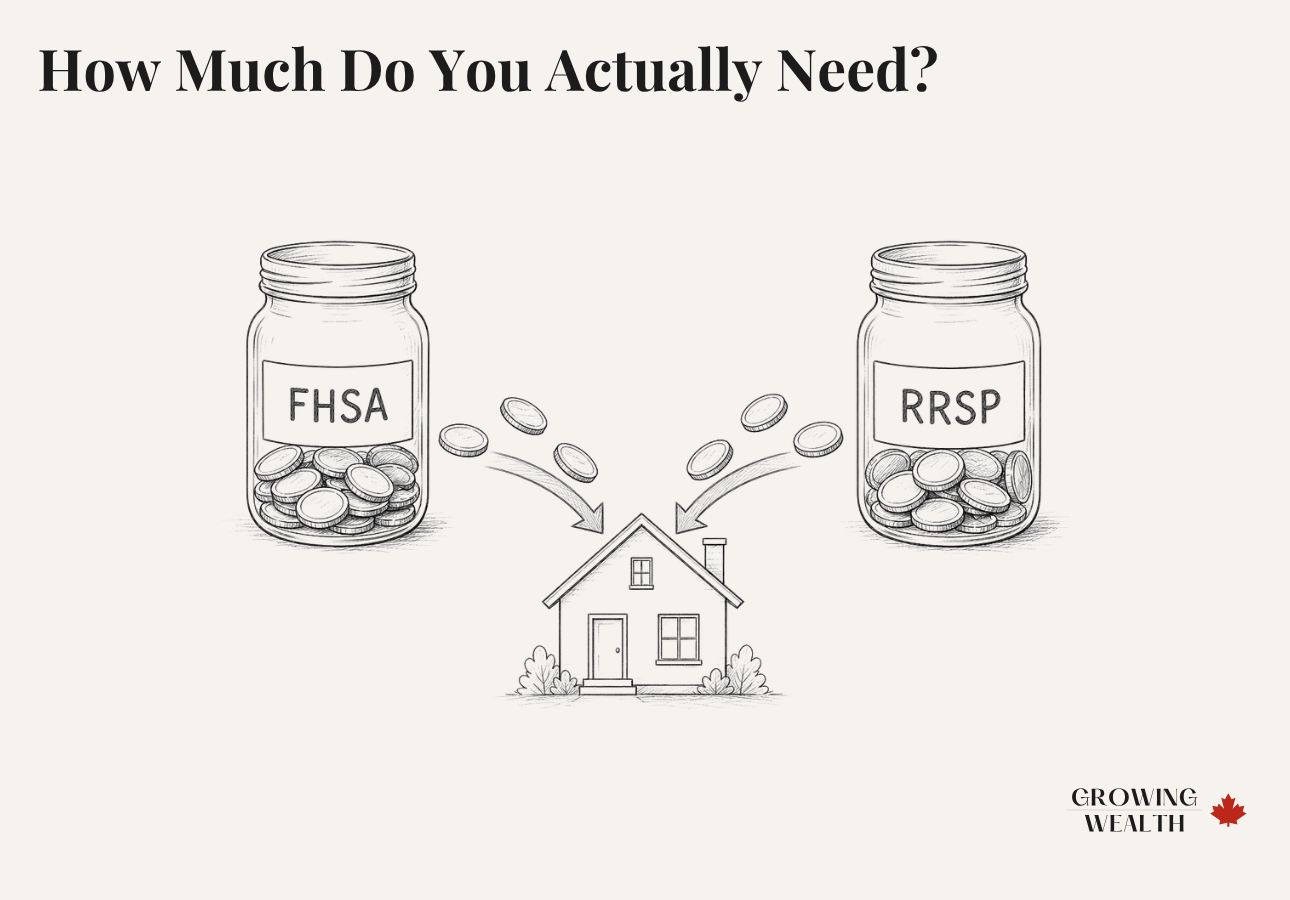
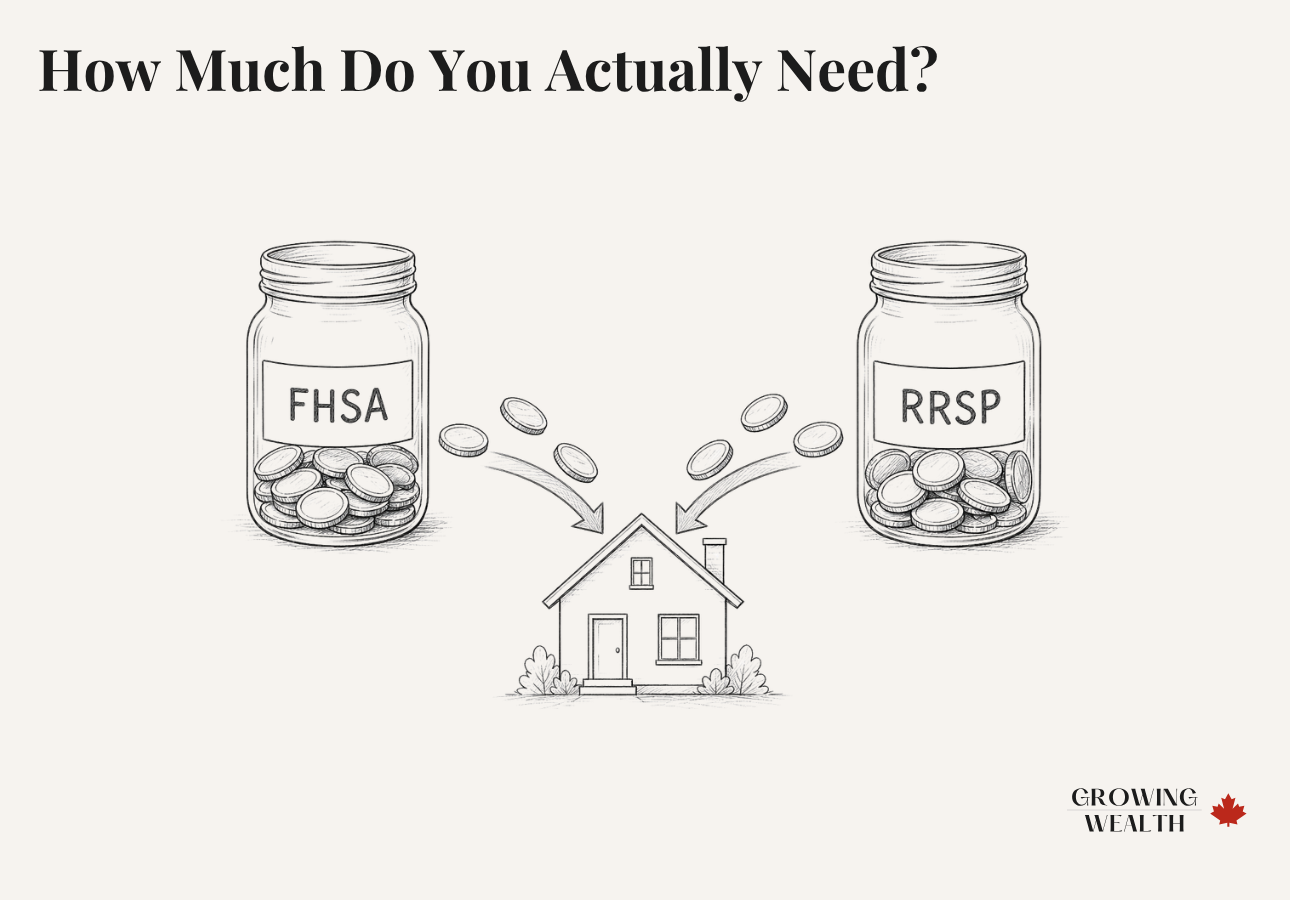
How Much Do You Actually Need?
Before we talk strategy, let’s talk targets — because the number you’re saving toward determines how aggressive your plan needs to be.
For a $650,000 home — roughly the national benchmark price as of early 2026 — the minimum down payment works out to about $40,000. But most financial planners and mortgage advisors recommend putting down at least 10–20% where possible, which on a $650,000 home means saving $65,000 to $130,000. And that figure doesn’t include closing costs — the land transfer tax, legal fees, and other cash expenses due on possession day, which typically add $8,000–$15,000 on top.
That’s a lot. But with the right accounts and a consistent savings habit, it’s very achievable — and the FHSA + HBP combination can accelerate your timeline significantly. If you want a deeper look at how mortgages actually work before diving into your savings plan, see our guide to how mortgages work in Canada.
The FHSA: The Best Account for First-Time Buyers
The First Home Savings Account was introduced by the federal government in 2023, and it’s genuinely one of the best savings vehicles ever created for first-time buyers. Here’s why: it combines the tax deduction of an RRSP with the tax-free withdrawal of a TFSA — and you keep both benefits as long as you’re buying a qualifying home.
| Feature | Details |
|---|---|
| Annual contribution limit | $8,000 |
| Lifetime contribution limit | $40,000 |
| Tax deduction on contributions | ✅ Yes |
| Investment growth | Tax-free |
| Withdrawal for home purchase | Tax-free, no repayment required |
| Carry-forward unused room | ✅ Yes (up to $8,000 per year) |
| Account lifespan | 15 years, or until you turn 71 |
| Eligible age | 18–71 (or age of majority in your province) |
FHSA withdrawals for a qualifying home purchase don’t need to be repaid. The money is yours, tax-free.
Contribution room only starts accumulating once you open the account. If you open your FHSA today and do nothing else, you’re still building room. Open it as early as possible — even if you can only contribute a small amount right now.
For FHSA accounts, both EQ Bank and Wealthsimple are strong options. EQ Bank offers a high-interest FHSA savings account — great if you’re buying in the next 1–3 years and want to minimize risk. Wealthsimple lets you invest your FHSA in ETFs, which makes more sense if your timeline is 3–5+ years and you’re comfortable with some market exposure.
The HBP: Borrowing From Your RRSP
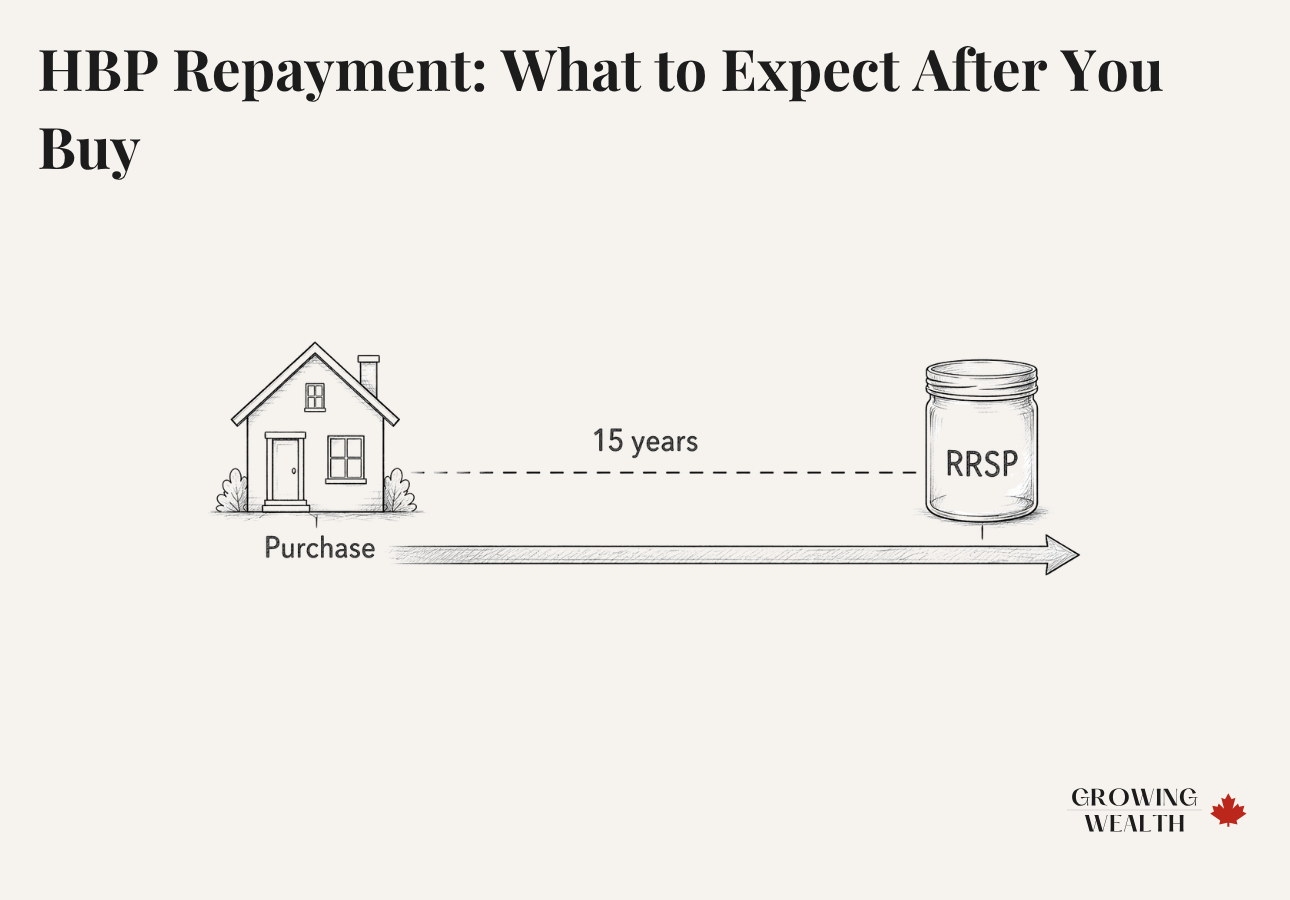
The Home Buyers’ Plan is a long-standing federal program that lets first-time buyers withdraw money from their RRSP to put toward a down payment. Think of it as an interest-free loan from your future self.
| Feature | Details |
|---|---|
| Maximum withdrawal (individual) | $60,000 |
| Maximum withdrawal (couple) | $120,000 combined |
| Source of funds | Must come from an RRSP (not TFSA, not FHSA) |
| Repayment period | 15 years |
| When repayment starts | Typically 2 years after withdrawal (see note below) |
| If you don’t repay minimum | That year’s repayment amount is added to your taxable income |
| First-time buyer requirement | ✅ Yes (cannot have owned a home you lived in for the last 5 years) |
The HBP withdrawal must come from an RRSP. This is a common source of confusion. If your savings are sitting in a TFSA or a regular savings account, those funds are not eligible for the HBP. You need to have been contributing to an RRSP — and those contributions generally need to have been in the account for at least 90 days before withdrawal.
On repayment
After using the HBP, you repay the withdrawn amount back into your RRSP over 15 years — at a minimum of 1/15 of the total each year. If you withdrew $30,000, your minimum annual repayment is $2,000. Miss a repayment, and that amount gets added to your taxable income for the year.
One more thing on timing
A temporary federal measure applied to those who made HBP withdrawals between January 1, 2022 and December 31, 2025, giving them five years (rather than two) before repayments had to begin. If you’re planning a withdrawal in 2026 or later, confirm the current repayment start date with CRA, as this temporary measure may not apply.
For RRSP accounts, both EQ Bank and Wealthsimple offer competitive options. EQ Bank’s RRSP savings account is excellent for preserving capital when your purchase is near. Wealthsimple’s RRSP lets you invest in a managed or self-directed portfolio — better suited if you have a longer runway before buying.
FHSA vs. HBP: How They Compare
Both accounts offer a tax deduction going in and tax-free withdrawal on the way out. The real differences come down to repayment, limits, and what happens if you don’t buy.
| FHSA | HBP (via RRSP) | |
|---|---|---|
| Tax deduction on contributions | ✅ Yes | ✅ Yes (RRSP contributions) |
| Tax-free growth | ✅ Yes | ✅ Yes (inside RRSP) |
| Tax-free withdrawal for home | ✅ Yes | ✅ Yes (while in HBP) |
| Repayment required | ❌ No Winner | ✅ Yes — 15 years |
| Maximum available (individual) | $40,000 lifetime | $60,000 Higher |
| Maximum available (couple) | $80,000 | $120,000 |
| Can invest inside account | ✅ Yes | ✅ Yes |
| If you don’t buy | Transfer to RRSP tax-free | Funds stay in RRSP |
The FHSA wins on simplicity and flexibility. The HBP gives you access to more money if you have RRSP savings already built up. The real power is using them together.
The Combined Strategy: FHSA + HBP Together
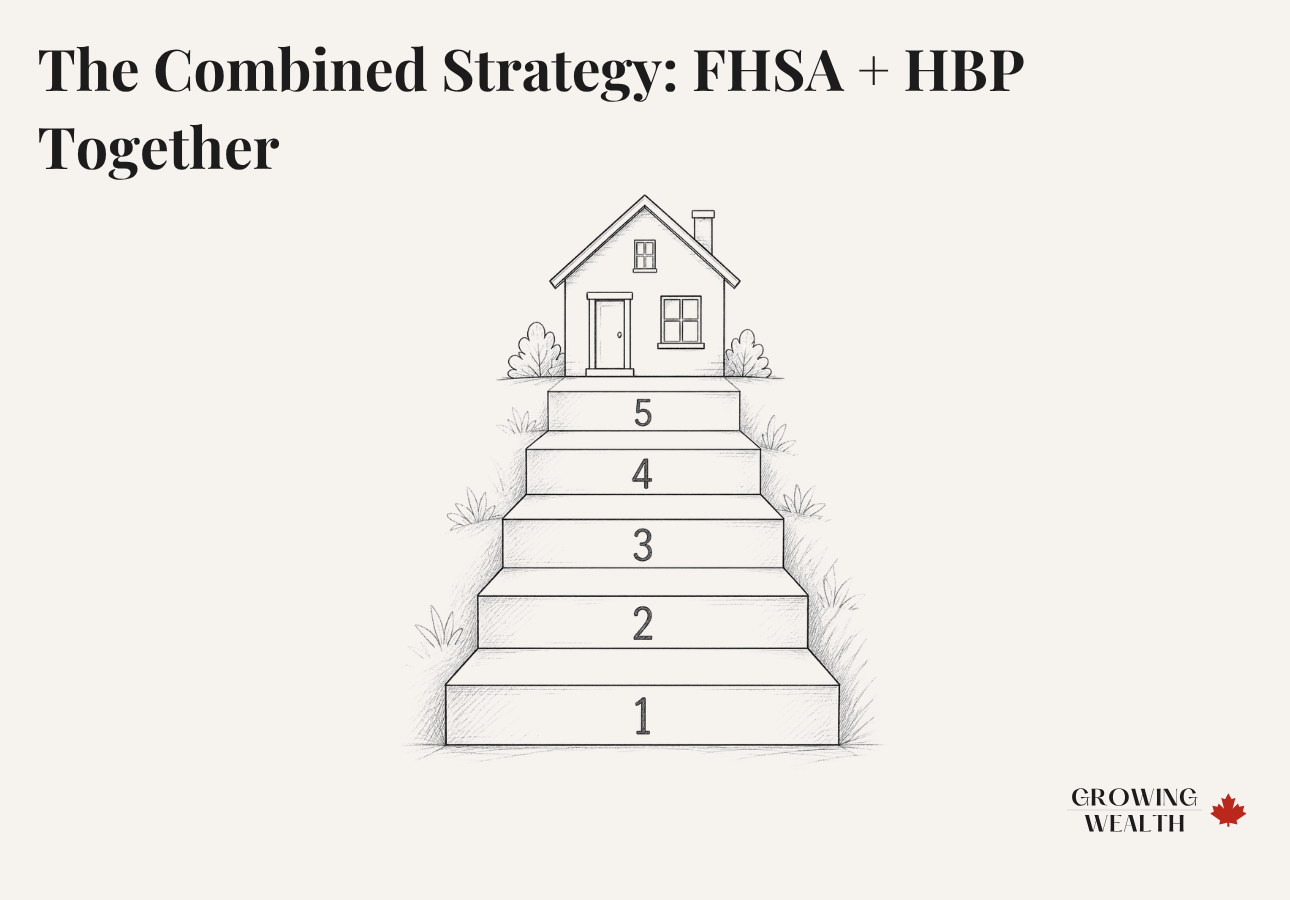
Here’s the move most first-time buyers don’t know about: you can use both the FHSA and the HBP for the same home purchase. The CRA explicitly allows this. That means a couple could access up to $200,000 in tax-advantaged savings toward a single down payment — not including investment growth inside those accounts.
Real Example: How a Toronto Couple Saves $90,000+

Let’s put real numbers to this. Meet Jordan and Alex, a Toronto-area couple with a combined household income of $110,000. They’re renting, targeting a $650,000 home, and have a 3-year savings runway.
Alex opens FHSA → contributes $8,000 → tax refund ≈ $2,640
Jordan opens RRSP → contributes $5,000 → tax refund ≈ $1,650
Alex opens RRSP → contributes $5,000 → tax refund ≈ $1,650
Both redirect ~$4,000 of combined refunds back into savings
Alex: $8,000 FHSA + $8,000 RRSP
Combined new contributions: $32,000
Alex: $8,000 FHSA + $8,000 RRSP
| Source | Jordan | Alex | Combined |
|---|---|---|---|
| FHSA withdrawal | $25,500 | $25,500 | $51,000 |
| HBP (RRSP) withdrawal | $24,000 | $24,000 | $48,000 |
| Total down payment | — | — | ~$99,000 |
On a $650,000 home, a $99,000 down payment is just over 15% — enough to significantly reduce CMHC mortgage insurance premiums compared to a 5% down payment, and to meaningfully lower their monthly mortgage payment.
This scenario assumes consistent contributions and modest 4% annual growth inside their accounts. Actual results will vary based on investment choices and market performance. The tax refunds shown are illustrative — your actual refund depends on your marginal tax rate and other deductions.
What to Do With Your FHSA If You Don’t End Up Buying

Life changes. Maybe you decide renting makes more sense, move provinces, or simply don’t find a home you want to buy. Here’s the good news: your FHSA money isn’t lost.
If you don’t use your FHSA for a qualifying home purchase, you can transfer the full balance — contributions and growth — directly to your RRSP or RRIF, tax-free. You don’t need any extra RRSP contribution room for this transfer, and it doesn’t trigger any income tax.
The only catch: the FHSA must be closed within 15 years of opening it, or by the end of the year you turn 71. Plan accordingly, but don’t let the fear of “what if I don’t buy” stop you from opening one. In the worst case, you’ve made tax-deductible contributions that transfer seamlessly into your retirement savings.
HBP Repayment: What to Expect After You Buy
Once you’ve used the HBP, the clock starts on repayment. Here’s what you need to know.
The basics
You repay the withdrawn amount back into your RRSP over 15 years. The minimum annual repayment is 1/15 of what you withdrew. If you withdrew $48,000 under the HBP, your minimum annual repayment is $3,200.
How repayments work
You make regular RRSP contributions and designate a portion as your HBP repayment when filing your taxes. You can always pay back more than the minimum — there’s no penalty for accelerating repayments.
If you miss a repayment
The missed minimum amount is added to your taxable income for that year and taxed at your marginal rate. This isn’t catastrophic, but it erodes one of the main benefits of using the HBP in the first place.
Budget your annual HBP repayment into your post-purchase cash flow plan. Think of it as a mandatory line item — because it is. Many couples roll this into their regular RRSP contributions so it becomes automatic.
How to Get Started: A Simple Checklist
Where to Open Your Accounts
Choosing the right institution matters — especially for the interest rate on your FHSA savings account or the investment options inside your RRSP.
For a deeper look at digital banking options in Canada, see our guide to the best digital banks in Canada.
Bottom Line
Ready to buy? Our guide to Canadian Home Ownership walks through every stage — from pre-approval and closing costs to what owning actually costs month to month.
Frequently Asked Questions
Yes. The CRA explicitly allows you to use both programs for the same qualifying home purchase. You can withdraw your full FHSA balance tax-free and also make an HBP withdrawal from your RRSP — all toward the same down payment.
No. FHSA withdrawals for a qualifying home purchase are completely tax-free and do not require repayment. This is the key advantage over the HBP.
For both the FHSA and HBP, you cannot have owned a home that you lived in at any point during the current calendar year or in any of the four preceding calendar years. In other words, you haven’t lived in a home you owned in the last five years.
Yes. Each person can withdraw up to $60,000 from their own RRSP under the HBP, for a combined maximum of $120,000. Each person must meet the eligibility requirements individually.
Contributions that have been in your RRSP for less than 90 days are generally not eligible for HBP withdrawal. Plan ahead — make contributions well before you anticipate needing to withdraw.
Yes, as long as the contribution is made between January 1 and December 31 of that tax year. Unlike RRSPs, there is no “first 60 days” rule for FHSAs — the contribution must be in the account by December 31 to count for that tax year.
Your FHSA balance can be transferred to your RRSP or RRIF tax-free — with no impact on your existing RRSP contribution room. The only requirement is that you close the FHSA within 15 years of opening it, or by the end of the year you turn 71.
It depends on your timeline. If you’re buying in 1–2 years, a high-interest savings account inside your FHSA is the safer choice — you don’t want a market dip to shrink your down payment right before you need it. If you’re 3–5+ years out, investing in a balanced or conservative ETF portfolio inside your FHSA can meaningfully grow your savings.