Most Canadian families don’t struggle with money because they lack discipline or financial knowledge. They struggle because their finances are fragmented across too many accounts, too many rules, and too many decisions.
This article lays out a simple family finance system for Canadians—built for real household life. It avoids complex budgets, constant tracking, and over-optimization.
This is a system, not a checklist.
The Real Problem: Why Families Feel Broke on a Decent Income
It’s Not a Math Problem
Most middle-income Canadian families:
Earn stable income
Pay their bills on time
Save something (inconsistently)
Still feel financially stretched
If money were purely mathematical, this wouldn’t happen.
Decision Fatigue Is the Real Issue
The real pressure comes from decision overload:
Should we save more or pay down debt?
RRSP or TFSA this year?
Are we overspending—or just dealing with a heavy month?
Without a system, every decision is made in isolation. That creates stress, inconsistency, and second-guessing.
A good system reduces the number of decisions required.
The 4-Part Family Finance System
This system has four parts:
Visibility
Stability
Prioritization
Simplification
Each solves a different problem.
1. Visibility: The Numbers That Matter Right Now
You do not need a detailed budget. You need clarity.
The Three Numbers That Matter
Number
What It Shows
Net household income
What actually arrives in chequing
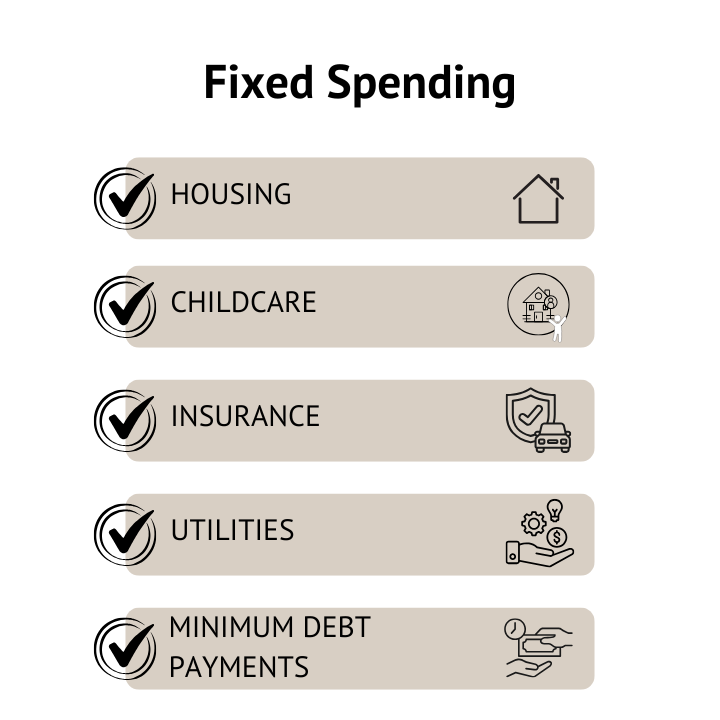
Fixed spending
Costs that are hard to change short-term
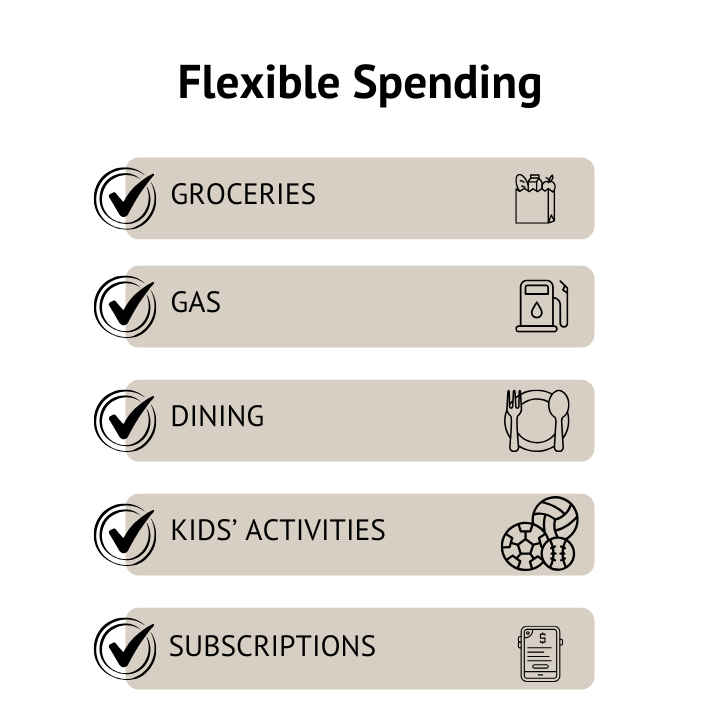
Flexible spending
Everything competing for the remainder
Most financial pressure comes from unmanaged flexible spending.
Upcoming 3–6 Month Expenses (Don’t Ignore These)
In addition to monthly spending, families need visibility on near-term cash obligations.
Common examples include:
These are not unexpected expenses. They are predictable and time-bound.
Treating them as future obligations—not surprises—helps explain why liquidity matters and why short-term savings often take priority over investing during certain parts of the year.
This isn’t about pessimism. It reflects how family cash flow actually works.
2. Stability: Emergency Buffers and Cash Flow Smoothing
Before optimizing returns, families need stability.
Emergency Funds That Make Sense in Canada
Emergency funds exist to:
Prevent high-interest debt
Absorb uneven months
Buy time to make rational decisions
For most Canadian families, this means 1–3 months of core expenses, not income. This range aligns with general financial guidance on emergency savings from Canadian financial institutions. For reference, see guidance from the Financial Consumer Agency of Canada.
Together, these form a single, practical system for managing family finances.
Final Takeaway
Canadian families don’t need stricter budgets or more financial pressure.
They need systems that reduce decision fatigue, reflect real life, and allow money to be managed with clarity instead of constant effort.
A simple system creates stability—and stability makes progress possible.
Frequently Asked Questions
Do Canadian families need a budget to manage money?
No. Most families benefit more from a simple system focused on visibility, stability, and consistency than from detailed tracking.
How much should an emergency fund be in Canada?
Typically 1–3 months of essential expenses, depending on income stability and household needs.
Should I use a TFSA or RRSP first?
It depends on income, tax bracket, and flexibility needs. Both serve different purposes.
How many bank accounts should a family have?
As few as possible while still separating spending, savings, and long-term money.
Affiliate Disclosure
💡 GrowingWealth.ca is supported by readers. Some of the links in this article are affiliate links, which means we may earn a small commission if you open an account or make a purchase — at no extra cost to you. We only recommend products and services we personally use, trust, or believe provide genuine value to Canadians. Our reviews and comparisons are always independent and objective.