
Building Security for Your Family’s Future

When you’re raising a family in Canada, it can feel like every dollar already has a job. Groceries, housing, sports fees, and maybe a family vacation if you’re lucky. But over time, the bigger question becomes: what about 20 or 30 years from now? Will you and your partner be able to retire comfortably, support your children as they launch into adulthood? And, in the end, enjoy the life you’ve worked so hard to build?
That’s where the Registered Retirement Savings Plan (RRSP) comes in. It’s not just a retirement account— rather, it’s a flexible financial tool that gives Canadian families real advantages today (through tax savings) and tomorrow (through long-term security). As a result, In 2026, RRSPs remain one of the smartest ways to balance family expenses now while preparing for the future you want.
Whether you’re a young family starting to save, parents juggling mortgages and kids’ education, or nearing retirement, understanding how RRSPs work can therefore help you make smart choices.
What Is an RRSP? Clear Definitions & Overview
An RRSP (Registered Retirement Savings Plan) is a government-registered investment account designed to encourage Canadians to save for retirement.
Key features of RRSPs:
- Tax-deductible contributions: The money you contribute reduces your taxable income, often resulting in a tax refund.
- Tax-deferred growth: Investments inside an RRSP (stocks, ETFs, mutual funds, GICs, bonds) grow without being taxed until withdrawal.
- Contribution limits: In 2025, the annual limit is 18% of earned income, up to $32,490 (indexed annually for inflation). Unused contribution room carries forward. In 2026, the annual limit goes up to $33,810
- Withdrawal rules: Withdrawals are taxed as income. However, special programs like the Home Buyers’ Plan (HBP) and Lifelong Learning Plan (LLP).
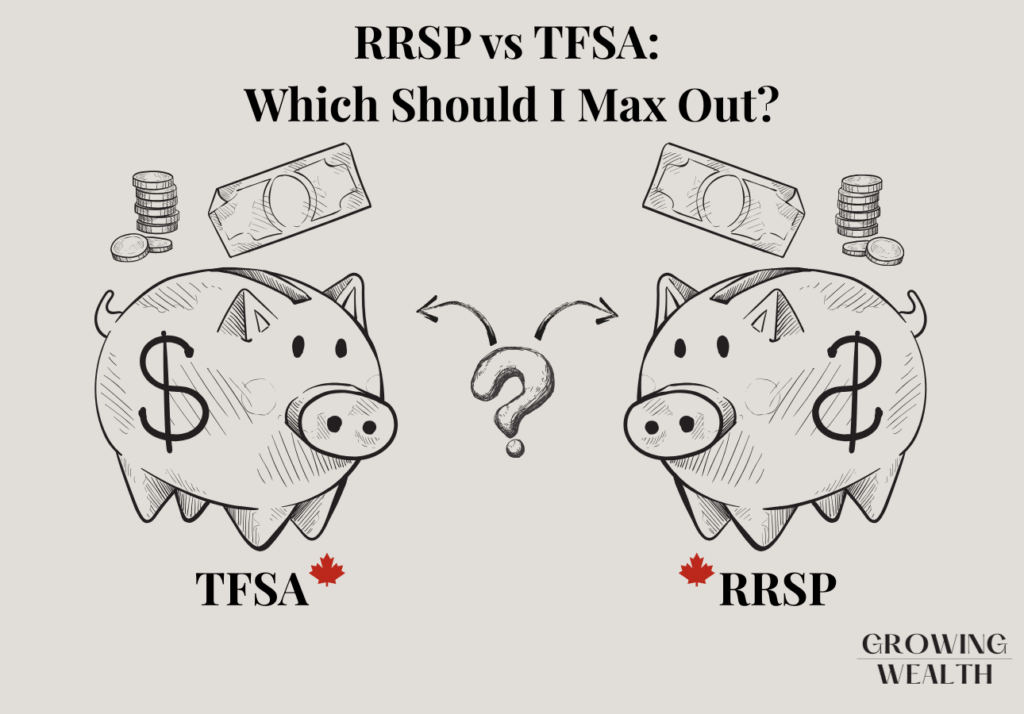
RRSP vs. TFSA: Quick Snapshot
Families often compare RRSPs with TFSAs. In fact, both accounts serve different purposes and can complement each other.
| Feature | RRSP | TFSA |
| Contribution Limit 2025 Contribution Limit 2026 | 18% of income up to $32,490 18% of income up to $33,810 | $7,000 annual limit $7,000 annual limit |
| Tax on Contributions | Deductible (reduces taxable income) | Not deductible |
| Growth | Tax-deferred | Tax-free |
| Withdrawals | Taxable (except HBP/LLP) | Tax-free |
| Best For | Retirement savings, high-income earners | Flexible savings, tax-free withdrawals |
For more detail, see our companion article on TFSAs in Canada: 2026 Guide for Families
Why RRSPs Matter for Families in Canada (2026)

In reality, RRSPs aren’t just for individuals planning solo retirements. In reality, they’re especially powerful for families:
- Tax Savings for Parents
- A family earning $100,000 combined could save thousands in taxes by contributing to an RRSP.
- In turn, these savings can be redirected toward children’s expenses, debt repayment, or additional investments.
- Spousal RRSPs
- Contributing to a spouse’s RRSP balances retirement savings and reduces household taxes.
- This is particularly helpful when one partner earns significantly more than the other.
- Home Buyers’ Plan (HBP)
- Families can withdraw up to $35,000 per person ($70,000 per couple) from their RRSPs to buy a first home, tax-free if repaid within 15 years.
- Importantly, the withdrawal is tax-free if repaid within 15 years.
- Education Support
- Through the Lifelong Learning Plan, you can withdraw up to $20,000 ($10,000 per year) for you or your spouse’s education or retraining. As a result, families gain flexibility when upgrading skills.
In short, RRSPs give families flexibility; moreover, they offer tools for housing, education, and tax relief.
RRSPs in Context: How They Compare in Canada 2026
Families often wonder: Should I put money into an RRSP or a TFSA? Ultimately, the answer depends on your goals.
- High-income families: For example, RRSPs usually provide bigger immediate tax savings.
- Lower-income families: TFSAs might be better since withdrawals don’t affect government benefits (like Canada Child Benefit or GIS in retirement).
- Balanced approach: Many households, therefore, split contributions between RRSPs and TFSAs.
Pros and Cons of RRSPs

- For example, significant tax savings for contributors through annual deductions.
- A wide range of investment options, in particular stocks, ETFs, mutual funds, and more.
- Spousal RRSPs help balance income in retirement and, as a result, lower household taxes.
- Home Buyers’ Plan and Lifelong Learning Plan provide flexibility; in fact, both allow withdrawals without penalty if repaid.
- Unused contribution room carries forward indefinitely, which means families can catch up later.

- Withdrawals are fully taxable as income, and therefore reduce take-home amounts.
- Withdrawals can reduce government benefits (OAS, GIS); in other words, they may lower eligibility.
- RRSP funds are locked in for retirement; consequently, they are less flexible than TFSA savings.
- Contribution limits depend on earned income, which makes them less ideal for stay-at-home parents.
In summary, RRSPs offer powerful benefits but also come with important limitations.
Real-Life Examples & Use Cases



Strategies & Best Practices for Families
Best RRSP Providers & Options in Canada (2026)
Choosing the right provider makes a big difference in fees, flexibility, and investment choices.
Big Banks (Good for Families Who Want Simplicity)
- RBC, TD, BMO, CIBC, Scotiabank
- Pros: In-branch support, bundled family banking deals, easy access.
- Cons: Higher fees on mutual funds and advisor accounts.
Online Banks & Fintechs (Low Fees, DIY Investors)
- Wealthsimple RRSP – no account fees, automated investing, free tax software.
- EQ Bank RRSP – high-interest RRSP savings account; in particular, great for conservative savers.
- Tangerine RRSP – simple index funds, user-friendly platform.
Credit Unions & Regional Options
- Often offer competitive rates and local service. Moreover, families who prefer personal support may find this appealing.
Discount Brokerages (For Self-Directed Investors)
- Questrade, TD Direct Investing, RBC Direct Investing
- Overall, best for families comfortable managing their own portfolios.
Why Families Should Revisit RRSPs in 2026
Overall, RRSPs remain one of the most effective ways for Canadian families to reduce taxes, save for retirement, and access programs like the Home Buyers’ Plan. At the same time, TFSAs offer more flexibility, so families should carefully weigh both options before deciding.
In many cases, the best strategy in 2026 is a balanced approach. Contribute to your RRSP to maximize tax savings, and in addition, build flexible savings in a TFSA to cover short-term needs. This way, you secure both immediate tax relief and long-term growth.
👉 Ready to open an RRSP? Consider starting with low-fee options like Wealthsimple or Questrade.
👉 Need help comparing registered accounts? Download our free Registered Accounts Comparison Guide—a clear breakdown for Canadian families.
💡 Want to turn what you’ve just learned into lasting results?
Read our cornerstone guide — The Power of Financial Habits: How to Build Lasting Wealth — and learn how small, consistent actions create real financial freedom.
Affiliate Disclosure
💡 GrowingWealth.ca is supported by readers. Some of the links in this article are affiliate links, which means we may earn a small commission if you open an account or make a purchase — at no extra cost to you. We only recommend products and services we personally use, trust, or believe provide genuine value to Canadians. Our reviews and comparisons are always independent and objective.