
Your credit score plays a major role in your financial life. It affects whether you can qualify for credit cards, loans, mortgages, and sometimes even rental housing.
A good credit score in Canada is generally considered 670 or higher.
Canadian credit scores range from 300 to 900, and lenders typically view scores above 700–720 as strong enough to qualify for most financial products, including many rewards credit cards and competitive mortgage rates.
However, the full story is more nuanced. Different lenders use slightly different scoring models, and certain financial products may require higher scores than others.
Understanding how credit scores work, how lenders interpret them, and how your score compares to other Canadians can help you make better financial decisions.
In this guide, you’ll learn:
- What counts as a good credit score in Canada
- The average credit score for Canadians
- What credit score you need for mortgages and credit cards
- How to check and improve your credit score
What Is a Credit Score?
A credit score is a three-digit number that represents how reliable you are as a borrower.
In Canada, credit scores typically range from 300 to 900, with higher numbers indicating stronger creditworthiness.
The Canadian credit scoring system uses information from your credit report to estimate how risky a borrower you may be for lenders.
Credit reports are maintained by Canada’s two major credit bureaus:
Equifax Canada
TransUnion Canada
Lenders review these reports when deciding whether to approve applications for:
- Credit cards
- Personal loans
- Auto loans
- Mortgages
- Lines of credit
Many rewards cards featured in our guide to Best Credit Cards in Canada require applicants to have good to excellent credit.
Credit Score Ranges in Canada
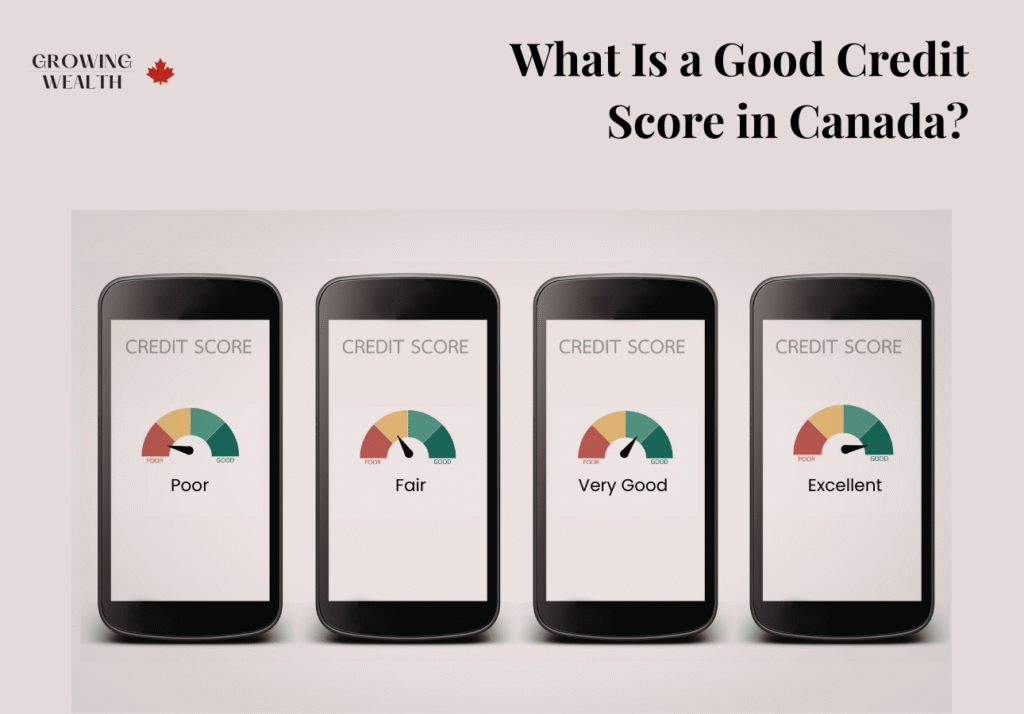
Credit scores fall into several general ranges that lenders use to evaluate borrowers.
| Credit Score | Rating | Typical Interpretation |
|---|---|---|
| 800 – 900 | Excellent | Exceptional credit profile with the strongest approval odds |
| 740 – 799 | Very Good | Strong credit and access to most premium financial products |
| 670 – 739 | Good | Generally considered a good credit score in Canada |
| 580 – 669 | Fair | May qualify for credit but often with higher interest |
| 300 – 579 | Poor | Limited access to credit; lenders view this as high risk |
In Canada, a credit score of 670 or higher is generally considered good.
Scores above 740 are typically considered very strong by lenders.
Quick Tip
How does your credit score compare to other Canadians?
Data from Borrowell suggests the average Canadian credit score is in the mid-600s.
Borrowell publishes consumer credit insights based on anonymized credit report data from millions of Canadians who use their free credit monitoring service.
The Government of Canada also provides guidance on how credit scores work through the Financial Consumer Agency of Canada (FCAC), which explains how lenders evaluate borrowers and how Canadians can protect their credit.
What Is the Average Credit Score in Canada?
While a good credit score starts around 670, the average Canadian credit score tends to fall slightly lower.
Consumer credit data suggests the national average sits in the mid-600 range.
This means many Canadians fall into the fair-to-good credit range. While this can qualify for some financial products, higher scores often unlock better interest rates and stronger rewards credit cards.
Moving your score into the 700+ range can significantly improve the financial products available to you.
Why Credit Scores Matter for Canadian Families
Credit scores affect more than just loan approvals.
A strong credit score can help families:
- Qualify for better credit cards
- Access higher credit limits
- Receive lower interest rates on loans
- Qualify for mortgages
- Avoid deposits on utilities or phone plans
Many cards featured in our guides to Best Cash Back Credit Cards in Canada and Best Travel Credit Cards in Canada require applicants to have good or excellent credit.
If you’re deciding which rewards structure works best, see our comparison of Cash Back vs Travel Rewards Credit Cards.
How Credit Scores Are Calculated in Canada
The Canadian credit scoring system evaluates several factors in your credit history.
Payment History
Your record of paying bills on time is the most important factor affecting your credit score.
Late or missed payments can significantly lower your score.
Credit Utilization
Credit utilization measures how much of your available credit you’re using.
Example:
- Credit limit: $10,000
- Balance: $3,000
- Utilization: 30%
Experts generally recommend keeping utilization below 30%.
Length of Credit History
The longer your credit accounts remain open, the stronger your credit profile appears.
Types of Credit
Having a mix of credit types may slightly improve your score.
Examples include credit cards, auto loans, lines of credit, and mortgages.
New Credit Applications
Applying for multiple credit products in a short time can temporarily reduce your score because each application creates a hard inquiry.
If your score needs improvement, see our guide on How to Improve Your Credit Score in Canada.
How to Check Your Credit Score in Canada
Canadians can check their credit score through several providers.
Popular options include:
- Borrowell – free Equifax credit score
- Credit Karma Canada – free TransUnion credit score
- Equifax Canada – official credit reports
- TransUnion Canada – official credit reports
Many Canadian banks also offer free credit score monitoring inside their online banking apps.
Checking your own credit score does not lower it, because these checks are considered soft inquiries.
What Credit Score Do You Need for a Mortgage in Canada?
Mortgage lenders typically prefer borrowers with a credit score of at least 680.
Borrowers with scores above 720 generally qualify for the best mortgage rates.
Lenders also consider:
- Income stability
- Debt levels
- Down payment size
- Employment history

What If Your Credit Score Isn’t Good Yet?
Many Canadians discover their credit score is lower than expected when they first check it.
Fortunately, credit scores are designed to improve over time with responsible credit habits.
Secured Credit Cards
Secured credit cards require a refundable deposit that becomes your credit limit.
Because the lender holds collateral, these cards are easier to qualify for when rebuilding credit.
Credit-Building Card Options
Some financial institutions offer cards designed to help Canadians build credit.
For example, Neo Financial offers secured versions of its credit cards.
According to Neo:
“If you’re starting out or rebuilding credit, you’ll get an offer for a Neo Mastercard with a secured credit limit so you can build your credit history.”
Neo offers secured versions of several cards, including some that normally require higher income thresholds.
If your score is still improving, some options in our guide to Best No-Fee Credit Cards in Canada may also be easier to qualify for.
How Long Does It Take to Improve Your Credit Score?
Improving your credit score takes time, but some actions can have an impact relatively quickly.
| Action | Typical Timeline |
|---|---|
| Paying down credit card balances | 1–2 months |
| Consistent on-time payments | 3–6 months |
| Building strong credit history | 6–24 months |
For a detailed plan, see our guide on How to Improve Your Credit Score in Canada.
Common Credit Score Myths
Myth: Checking your credit score lowers it
Checking your own score is a soft inquiry and does not affect your credit score.
Myth: Carrying a credit card balance improves your score
You do not need to carry a balance to build credit. Paying your balance in full is generally better.
Myth: Closing credit cards always improves your score
Closing older accounts can sometimes reduce your credit history length.
Using Credit Responsibly
Building a strong credit score ultimately comes down to responsible borrowing habits.
The Financial Consumer Agency of Canada recommends:
- Paying bills on time
- Keeping balances low
- Avoiding too many credit applications
- Checking credit reports regularly
- Borrowing only what you can afford to repay
Full guidance is available on the Financial Consumer Agency website.
The Bottom Line
A good credit score in Canada is generally 670 or higher, while scores above 700–720 usually qualify for the best financial products.
Maintaining strong credit can lead to:
- Lower borrowing costs
- Better credit card rewards
- Easier mortgage approvals
- Greater financial flexibility
If your score needs improvement, start with our guide on How to Improve Your Credit Score in Canada.
Frequently Asked Questions
Is 650 a good credit score in Canada?
A score of 650 is considered fair. Some lenders may approve credit applications, although interest rates may be higher.
Is 700 a good credit score in Canada?
Yes. A 700 credit score is generally considered good and qualifies for many financial products.
What credit score is needed for a mortgage in Canada?
Most lenders prefer a minimum score around 680, while 720+ usually qualifies for the best mortgage rates.
Does checking your credit score lower it?
No. Checking your own credit score is a soft inquiry and does not affect your credit score.
Affiliate Disclosure
💡 GrowingWealth.ca is supported by readers. Some of the links in this article are affiliate links, which means we may earn a small commission if you open an account or make a purchase — at no extra cost to you. We only recommend products and services we personally use, trust, or believe provide genuine value to Canadians. Our reviews and comparisons are always independent and objective.