

A New Path to Homeownership
Buying a home in Canada has never been easy—and in 2026, affordability is still one of the top financial concerns for families. Rising housing prices, higher interest rates, and limited supply make saving for a down payment a huge challenge. That’s where the First Home Savings Account (FHSA) comes in.
Introduced in 2023, the FHSA is a powerful tool that combines the best features of both an RRSP and a TFSA. It allows Canadians to save money tax-free specifically for their first home. For families—whether you’re parents hoping to help your children buy their first home, or young couples saving for your own—the FHSA can make a real difference.
In this guide, we’ll cover everything families need to know about the FHSA in Canada, including how it works, why it matters, its pros and cons, and the best strategies for maximizing its benefits.
What is the FHSA? Clear Definitions & Overview
The First Home Savings Account (FHSA) is a registered account created by the Canadian government to help first-time homebuyers save for a down payment.
Here’s how it works:
- Contributions are tax-deductible (like an RRSP).
- Withdrawals for your first home are tax-free (like a TFSA).
- Annual contribution limit: $8,000 per year.
- Lifetime contribution limit: $40,000.
- Unused contribution room can be carried forward.
- The account can stay open for up to 15 years or until the year you turn 71.
To open an FHSA, you must:
- Be a Canadian resident.
- Be at least 18 years old.
- Be a first-time homebuyer (not owned a home in the last 4 years).
This makes the FHSA one of the most generous savings vehicles ever introduced in Canada, combining the benefits of two popular registered accounts.

Why the FHSA Matters for Families
The FHSA isn’t just for single first-time buyers. It can be a family strategy. Here’s why:
- Couples can double the benefit. Each partner can open their own FHSA and save up to $40,000. Together, that’s $80,000 in lifetime contributions—all with tax deductions and tax-free withdrawals.
- Parents can help their kids. While you can’t directly contribute to your child’s FHSA, you can gift them money that they deposit, maximizing tax savings for your household.
- Tax relief for young families. Every contribution reduces taxable income, which can help with affordability during the expensive years of raising kids.
Accelerating the path to homeownership. With the housing market still challenging in 2026, this tool helps families save smarter, not harder.
FHSA vs. RRSP vs. TFSA: A Comparison
Many families wonder how the FHSA stacks up against other popular registered accounts. Here’s a quick comparison:
| Feature | FHSA | RRSP | TFSA |
| Purpose | First home savings | Retirement savings | Flexible savings/investing |
| Tax Deduction on Contributions | ✅ Yes | ✅ Yes | ❌ No |
| Tax-Free Withdrawals | ✅ Yes (for home) | ❌ No (taxed at withdrawal) | ✅ Yes |
| Contribution Limit | $8,000/year, $40,000 lifetime | 18% of income, max ~$33,810 (2026) | $7,000/year (2026 limit) |
| Carry-Forward Room | ✅ Yes | ✅ Yes | ✅ Yes |
| Withdrawal Restrictions | Must be for first home | Must repay if used under HBP | Anytime |
| Time Limit | 15 years or age 71 | Until age 71 | None |
Key Takeaway: The FHSA is the only account that gives you both a tax deduction on the way in and tax-free withdrawals on the way out, as long as you use it for your first home.
Click the links above for our companion article on each account type.
Pros and Cons of the FHSA

- Tax-deductible contributions (reduces income tax).
- Tax-free withdrawals when buying a first home.
- Can combine with the Home Buyers’ Plan (HBP) from an RRSP.
- Significant savings potential for couples.
- Flexible—can hold cash, GICs, stocks, ETFs, and mutual funds.

- Must be a first-time homebuyer to qualify.
- Limited lifetime contribution ($40,000).
- Funds must be used within 15 years, or transferred to an RRSP/RRIF.
- If not used for a home purchase, withdrawals are taxable.
Examples & Use Cases for Families
Let’s look at how Canadian families might use the FHSA in 2026:
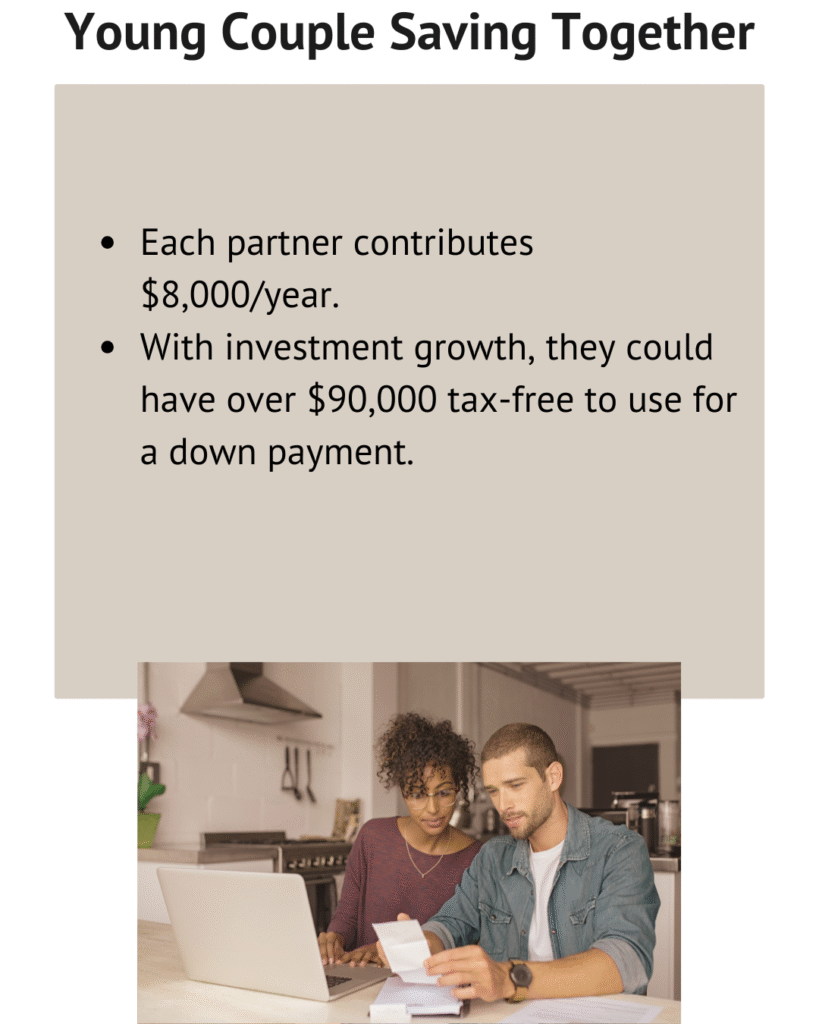
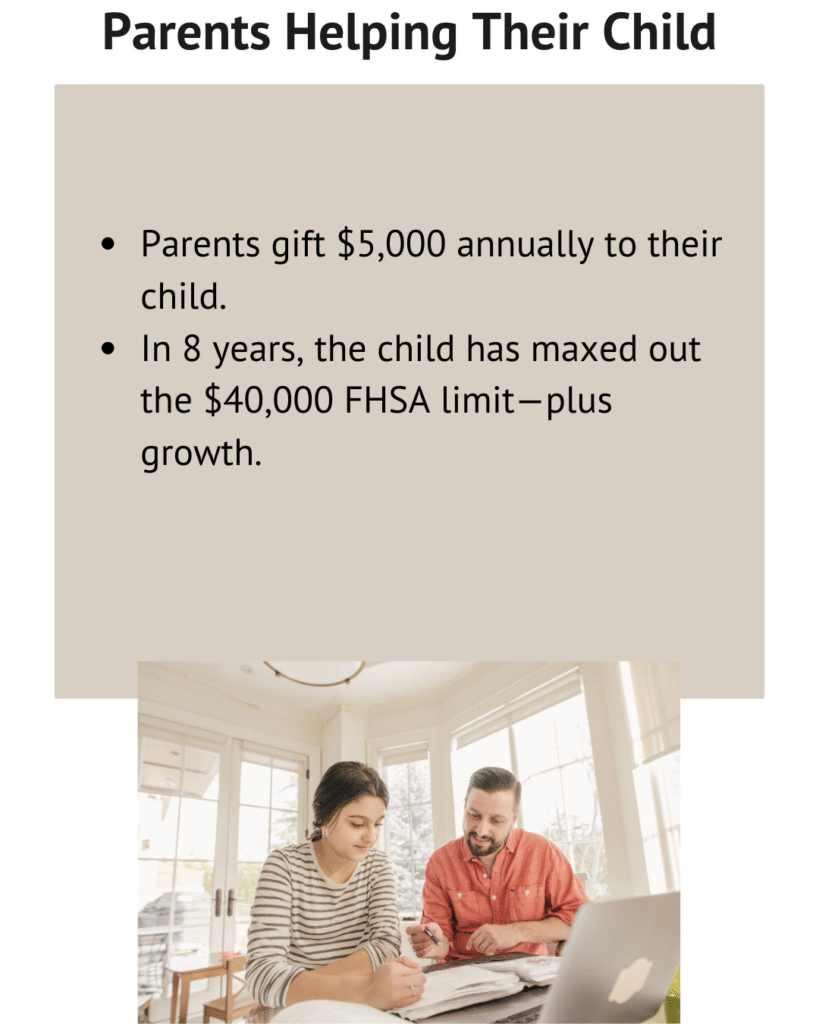
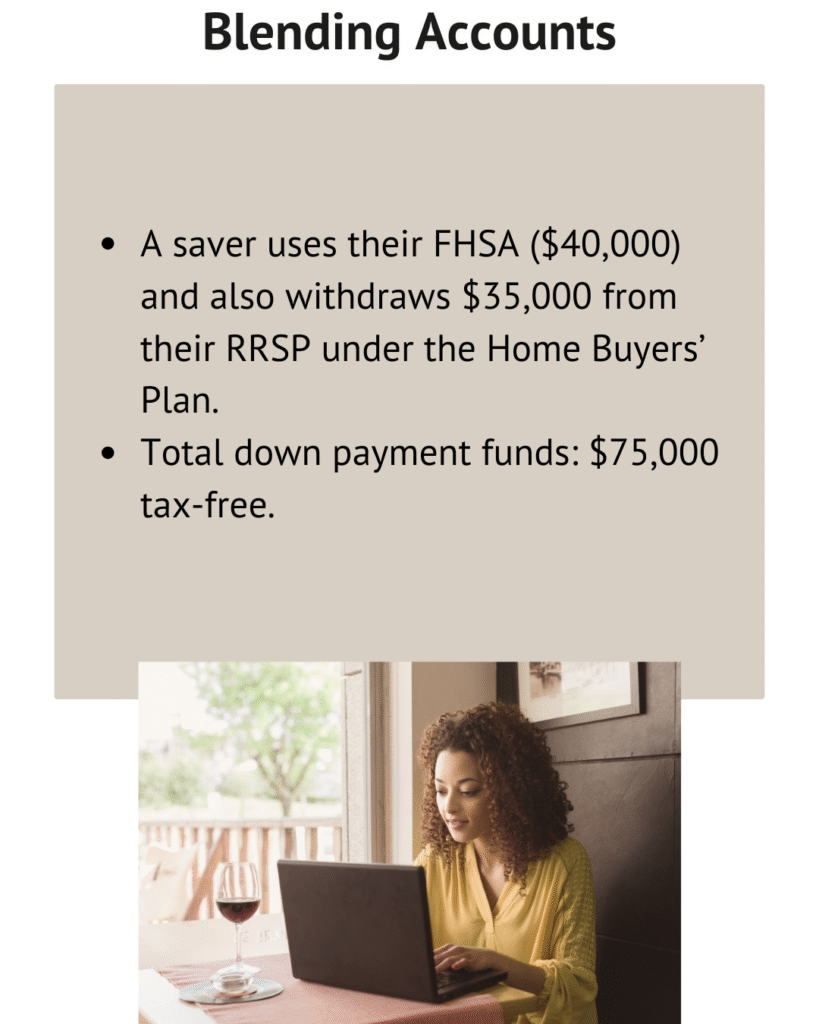
Strategies & Best Practices
To maximize your FHSA in 2026, consider these strategies:
- Start early. The sooner you open an FHSA, the more time your money has to grow.
- Max out annually if possible. $8,000/year contributions quickly add up.
- Invest wisely. Treat your FHSA like an investment account, not just a savings account—use ETFs, mutual funds, or GICs depending on your timeline.
- Coordinate as a couple. Both spouses should open accounts to double the benefit.
- Combine with RRSP HBP. Use both programs to maximize your down payment.
- Gift strategically. Parents can give funds to children for contributions, helping with both tax savings and homeownership goals.

Best FHSA Providers in Canada (2026)
By 2026, most major Canadian banks and fintech companies offer FHSAs. Here are some of the best options for families:
Big Banks
- RBC FHSA – Easy to bundle with existing accounts, broad investment options.
- TD FHSA – Strong mutual fund and ETF platform.
- Scotiabank FHSA – Offers promotions for first-time homebuyers.
- CIBC FHSA – Good for branch access and personalized advice.
- BMO FHSA – Competitive GIC and savings rates.
Digital Banks & Fintechs
- Wealthsimple FHSA – Low-cost investing with robo-advisor or DIY stock/ETF trading.
- Questrade FHSA – Great for self-directed investors.
- EQ Bank FHSA – High-interest savings options with no monthly fees.
- Tangerine FHSA – User-friendly, simple online banking experience.
Tip: Families who value hands-on advice may prefer big banks, while those who want low fees and flexibility may choose fintech providers.
Conclusion & Call to Action
The First Home Savings Account (FHSA) is one of the most family-friendly financial tools available in Canada in 2026. By combining tax deductions with tax-free withdrawals, it gives families a powerful way to save for one of life’s biggest milestones—buying a first home.
Whether you’re a young couple saving together, parents helping your children, or a family balancing multiple financial goals, the FHSA deserves a spot in your financial plan.
Next Steps for Families:
- Open your FHSA as soon as possible to start building contribution room.
- Decide whether to invest conservatively (if buying soon) or aggressively (if you have 5+ years).
- Compare providers—don’t just default to your bank.
👉 Ready to open your FHSA? Open an FHSA with a top provider like Wealthsimple or EQ Bank and take your first step toward homeownership.
👉Need help choosing between Registered Accounts? Download our free Registered Accounts Comparison Guide—a clear breakdown for Canadian families.
💡 Want to turn what you’ve just learned into lasting results?
Read our cornerstone guide — The Power of Financial Habits: How to Build Lasting Wealth — and learn how small, consistent actions create real financial freedom.
Affiliate Disclosure
💡 GrowingWealth.ca is supported by readers. Some of the links in this article are affiliate links, which means we may earn a small commission if you open an account or make a purchase — at no extra cost to you. We only recommend products and services we personally use, trust, or believe provide genuine value to Canadians. Our reviews and comparisons are always independent and objective.