
Most Canadian families don’t fail at money because they lack a budget. They fail because they don’t have a family finance system, just dozens of small financial decisions every single week, groceries, gas, whether this bill waits until next payday, and a system built on willpower eventually loses to a Tuesday night when the kids are melting down and takeout wins. A budget tells you what happened. A system decides things in advance so you don’t have to. This article lays out the four-part system that replaces the daily decision-making with a structure that runs itself, and shows exactly how to set it up this week.
This article contains affiliate links. We may earn a commission if you open an account, at no cost to you. We only recommend products we’ve researched and trust.
 BUDGETING
In This Article
The Problem With “Just Budget Better”
Almost every piece of budgeting advice assumes the same thing: that if you just track your spending closely enough, categorize it precisely enough, and check in often enough, your finances will fall into line. For a single person with one income and predictable expenses, that can work. For a family, it usually doesn’t.
Families have two incomes on different pay schedules, expenses that spike with the school calendar, kids whose costs change every year, and a partner who has their own opinions about money. A system that requires both people to log every purchase and agree on every category will get abandoned by March. This isn’t a failure of discipline. It’s a mismatch between the tool and the problem. A traditional budget still has its place, especially in the early months of getting spending under control, and our guide to how to budget in Canada covers that groundwork well. But a budget alone rarely survives contact with a two-income household long term.
The families who actually build wealth over time aren’t the ones with the most detailed spreadsheet. They’re the ones who removed as many decisions as possible from the process, so the plan survives a bad week. That’s what a system does that a budget doesn’t: it runs automatically whether or not anyone feels like managing money that month.
The Four-Part System: Visibility, Stability, Prioritization, Simplification
This system has four parts, and they work in sequence. Skipping ahead, like trying to prioritize before you have visibility, is why most attempts stall out.
Visibility: See Every Dollar in One Place
You cannot manage what you can’t see. Before anything else, both partners need a shared, accurate picture of every account, every recurring bill, and every debt. This means:
A shared document or app listing every bank account, credit card, loan, and investment account, with current balances
Every recurring expense (rent or mortgage, utilities, insurance, subscriptions, daycare or school costs) in one list with amounts and due dates
Total household income after tax, from all sources, updated whenever it changes
This step alone surfaces most of the problems. Forgotten subscriptions. A credit card neither partner remembers opening. Two people who each assumed the other was handling the hydro bill. Visibility isn’t glamorous, but it’s the step that makes everything after it possible, and it typically takes one focused evening, not weeks.
Stability: Structure the Money Before You Spend It
Once you can see everything, the next step is structuring where money goes the moment it arrives, not after it’s already been spent on other things. This is the difference between a system and a budget: a budget reviews spending after the fact, a system routes money before it can be spent.
In practice, this means automatic transfers set up on payday:
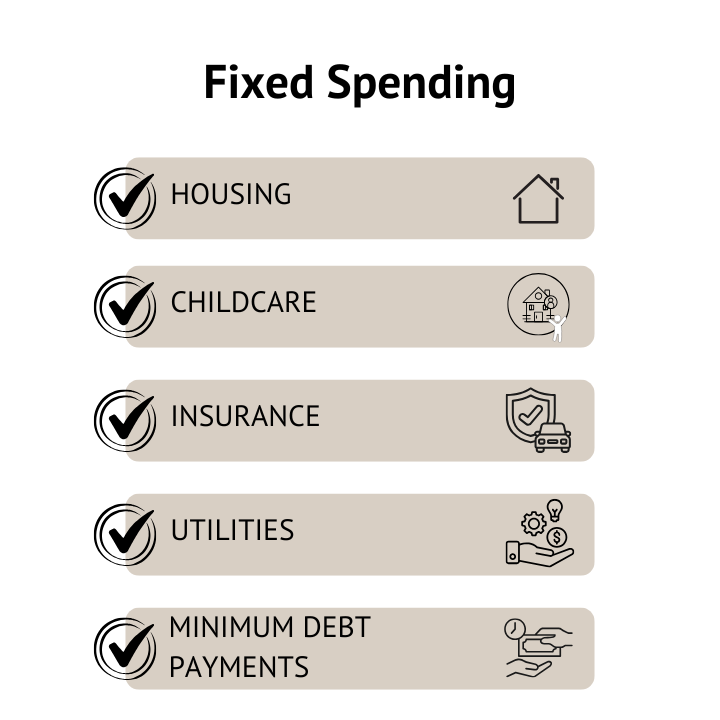
Fixed bills paid from one dedicated account
A set amount to savings and registered accounts, transferred automatically before either partner sees it as “available” money
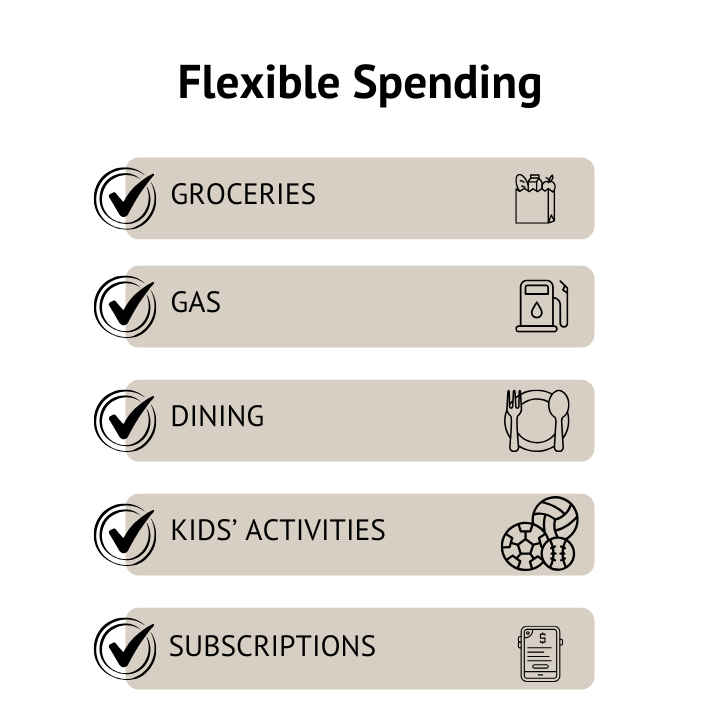
A set amount to a joint spending account for groceries, gas, and shared household costs
Individual discretionary amounts for each partner, in separate accounts, so neither person has to ask permission for a coffee or a haircut
The automation is the point. If a transfer requires you to remember to do it, on a random day, when you’re distracted, it doesn’t happen consistently. If it happens automatically on payday, it happens every single time.
Where you hold the savings piece matters too. A high-interest savings account earning a real rate, rather than a legacy account paying next to nothing, means the automation is also doing quiet work in the background. See our full breakdown of where to park cash safely in Canada and our comparison of the best digital banks if you want to weigh your options.
Pays 2.75% with a qualifying $2,000/month direct deposit (1.00% otherwise), no monthly fees, which makes it a straightforward landing spot for the automated savings transfer.
Open an EQ Bank account →Prioritization: Decide the Order Money Moves, in Advance
With money now flowing automatically, the next decision is what order it fills, once the essentials are covered. Most Canadian families should prioritize in roughly this order:
Minimum payments on all debt (never miss these, regardless of anything else)
A starter emergency fund of at least one month of essential expenses
High-interest debt payoff (anything above roughly 10 to 12 percent, mainly credit cards)
Employer RRSP matching, if available, since this is an immediate guaranteed return
TFSA and RRSP contributions based on your income and goals
A fully built emergency fund of three to six months of expenses
Additional debt payoff or investing, depending on interest rates and goals
Deciding this order once, as a couple, removes the argument that happens every single month about whether this year’s vacation fund or extra mortgage payments come first. The order is already set. New money simply flows into whatever step isn’t yet complete.
Simplification: Remove Every Unnecessary Decision
The last part is ongoing: actively removing complexity rather than adding it. Families accumulate financial clutter over time, extra accounts opened for a promotion, a chequing account at three different banks, a credit card kept open “just in case.” Every account is a password, a login, a statement to check, and a place money can quietly leak.
Simplification means consolidating to as few accounts as genuinely serve a purpose: one primary chequing account, one high-interest savings account, one joint account for shared costs, and registered accounts (TFSA, RRSP, FHSA) at one or two institutions. Fewer accounts means fewer places to check, and fewer places for something to go unnoticed. For the exact structure and automation sequence that keeps it this simple, see our guide on how to structure your bank accounts for automation.
The same logic applies to credit cards. One well-chosen cash back card for shared household spending, used deliberately rather than one card per store promotion, is simpler to track and usually earns more than three or four cards used inconsistently. See our best cash back credit cards in Canada if you’re consolidating down to one.
This is also where the system stops being a one-time setup and becomes a habit. See our guide on the power of financial habits for more on why systems like this one hold up better than willpower over the long run.
What This Looks Like for a Real Family
Take a household earning $95,000 combined after tax, a common enough figure for a dual-income family with young kids. Here’s how the four parts translate into an actual monthly structure:
Visibility
Both partners list three accounts each (chequing, HISA, RRSP or workplace pension), one shared credit card, and a car loan. Fixed monthly costs total $4,200: rent, utilities, daycare, insurance, phone, internet, and minimum debt payments.
Stability
On payday, $4,200 moves automatically to the bills account. $600 moves to a high-interest savings account split across the emergency fund and a house down payment goal. $900 moves to a joint account for groceries, gas, and shared costs. Each partner keeps $300 as individual discretionary money in their own account, no explanation required.
Prioritization
With minimum debt payments already covered in the bills account, this family is past the starter emergency fund stage. Extra money beyond the automated transfers, tax refunds, bonuses, side income, goes first to finishing the six-month emergency fund, then splits between the car loan (at 7 percent interest) and TFSA contributions.
Simplification
They closed a dormant chequing account from a bank one partner used before the relationship, and cancelled a $19/month subscription neither of them remembered signing up for. Two fewer logins, roughly $230 a year back.
None of this required a detailed spending log or a check-in more than once a month. The structure does the work.
Where Your Registered Accounts Fit
Registered accounts are where “prioritization” gets specific, and the rules for 2026 matter here.
Unused room carries forward indefinitely. Withdrawals are never taxed, and withdrawn amounts are added back to your contribution room the following January 1, not immediately. For most families, the TFSA is the default first stop after debt and the emergency fund.
Contributions reduce your taxable income in the year you contribute, which matters most when your marginal tax rate is high now and expected to be lower in retirement. Employer RRSP matching should generally come before TFSA contributions, since it’s a guaranteed return.
Combines a TFSA’s tax-free withdrawals with an RRSP’s up-front deduction, provided the money goes toward a qualifying first home. For a family actively saving for a down payment, prioritize this ahead of general TFSA savings.
For a full breakdown of how these three accounts compare and which combination makes sense for your situation, see our complete guide to FHSA vs TFSA vs RRSP, and our head-to-head on RRSP vs TFSA if you’re weighing those two specifically. (Figures verified against the CRA’s contribution room guidance as of this writing.)
Building In Your Emergency Fund
The prioritization order above puts a starter emergency fund early, and a fully built one later, for a reason. An emergency fund isn’t optional inside this system, it’s the piece that keeps the rest of the structure from collapsing the first time something goes wrong.
Without one, a car repair or a lost month of income forces the family back into reactive decision-making, exactly the kind of decision fatigue this system exists to prevent. A car repair becomes a credit card balance. A lost month of income becomes a missed RRSP contribution and a maxed out line of credit. The whole point of automating money is defeated the first time an emergency has nowhere to draw from.
A starter fund of one month of essential expenses (not full income, just the bills account total) should be treated as non-negotiable before aggressively paying down anything beyond minimum payments or investing beyond an employer match. Once high-interest debt is cleared, building toward three to six months of expenses becomes the priority ahead of most other goals.
For the full breakdown of how much to hold, and where to hold it so it earns something instead of sitting idle, see our guide to how much emergency fund you really need.
Paying Down Debt Without Losing the System
Debt is where a lot of family finance systems break down, mainly because the advice gets moralistic instead of practical. There are two standard approaches, and the right one depends on what actually gets you to follow through.
| Method | How it works | Best for |
|---|---|---|
| Debt avalanche | Minimums on everything, extra dollars to the highest interest rate first | Saving the most money in total interest |
| Debt snowball | Minimums on everything, extra dollars to the smallest balance first | Staying motivated with faster visible wins |
Inside this system, the choice matters less than making it automatically. Once the extra debt payment amount is set in the “prioritization” step, it should transfer automatically to whichever debt the household has chosen to target, the same way savings transfers happen. The decision gets made once. After that, it’s a standing instruction, not a monthly negotiation.
Credit card debt above roughly 10 to 12 percent interest should almost always come before additional TFSA or RRSP contributions. Guaranteed double-digit “returns” from clearing high-interest debt are difficult to beat with any investment.
The Quarterly Check-In Rhythm
A system that runs on automatic transfers still needs a periodic check, not a daily one. This is the rhythm that keeps it accurate without turning into constant monitoring:
New TFSA and RRSP contribution room resets. Confirm the automated contribution amounts still match the new annual limits. Review the past year’s spending in broad strokes, not line by line, and adjust the automated transfer amounts if income changed.
RRSP contributions for the prior tax year must be made by the deadline (typically 60 days into the new year). Confirm both partners have made or planned their contributions before filing.
Mid-year check on the emergency fund balance and any debt payoff progress. This is also a natural point to revisit whether a HISA rate is still competitive, since rates move with the Bank of Canada’s decisions and a rate that was strong in January may not be by summer.
Review before the higher-spending fourth quarter. Confirm holiday spending has a dedicated amount inside the system rather than becoming an unplanned expense that disrupts everything else.
Four short check-ins a year, each under an hour, is enough to keep a well-built system accurate. Anything more frequent usually turns into the same decision fatigue the system was built to eliminate.
How to Set This Up This Week
Here’s the concrete sequence, in order, to go from reading this to having the system running:
Both partners, no kids, phones and laptops out. This takes 60 to 90 minutes done properly.
Use a shared spreadsheet or note. Include balances, interest rates on any debt, and due dates on bills.
Total after-tax household income and total fixed monthly expenses from the list above.
Bills, savings and registered contributions, joint spending, and individual discretionary amounts for each partner. The math is total income minus fixed bills, divided across the remaining three categories based on your priorities.
Through your bank’s bill pay or scheduled transfer feature, timed to land the day after payday.
Use the seven-step order above as a starting point, and write it down somewhere both partners can see it.
Any account that doesn’t serve a clear purpose.
One per quarter, using the check-in rhythm above.
That’s the entire setup. Nothing about it requires ongoing daily effort, which is the point.
The Bottom Line
If you take one thing from this: stop trying to budget better and start removing decisions instead. Automate the transfers on payday, agree on the priority order once, and check in four times a year.
A system that runs without willpower will outlast any resolution that depends on it.
Frequently Asked Questions
No. The system works whether you fully merge finances, keep everything separate with a shared expenses account, or use any hybrid in between. What matters is that both partners agree on the transfer amounts and the priority order, not that every account has both names on it.
Base the automated transfers on your lowest reliable monthly income over the past 12 months, not your average or your best month. Direct any income above that baseline straight to savings or debt payoff rather than treating it as spendable, since irregular income is the fastest way to accidentally overspend in a good month.
Most Canadian families do best with a hybrid: a joint account for shared costs like rent, groceries, and bills, plus individual accounts each partner controls without needing to explain every purchase. Fully separate finances with no shared account tend to make the “stability” step harder to automate cleanly.
There’s no fixed percentage that fits every household, but the amount should be small enough that savings and debt payoff aren’t compromised, and large enough that neither partner feels like they need permission for everyday choices. A common range for dual-income families is 5 to 10 percent of take-home pay per partner.
Some couples split shared costs proportionally to income rather than 50/50, so both partners retain a similar percentage of discretionary income after contributing to shared expenses. This is a conversation to have explicitly rather than defaulting to an even split that may feel unfair to the lower earner.
Yes. Treat recurring child-related costs (daycare, school fees) as fixed bills in the “stability” step, and irregular ones (sports registration, class trips, gifts) as a category inside the joint spending account rather than a surprise that disrupts the rest of the system.
Complete the visibility step fully, list every debt with its balance and interest rate, then build a starter one-month emergency fund before aggressively attacking debt. Skipping the starter fund to pay debt faster often backfires, since the next unexpected expense just goes back onto a credit card.
The quarterly check-in schedule above is the minimum structure, but many families also do a short 15-to-20-minute monthly check simply to confirm nothing unexpected came up. The goal isn’t more conversation, it’s making sure the conversations that do happen are short and infrequent because the system is doing the daily work.
Want to turn what you’ve just learned into lasting results? Read FHSA vs TFSA vs RRSP: Which Should You Use? to figure out exactly where your registered contributions should go.