
 Registered Accounts
January 1 matters for Canadians because it’s when new TFSA contribution room becomes available. More importantly, it’s the cleanest moment of the year to reset how your TFSA actually supports your finances.
This TFSA reset isn’t about rushing to invest or trying to be perfect on day one. It’s about positioning your TFSA so decisions throughout the year are simpler, cleaner, and less stressful.
This article contains affiliate links. We may earn a commission if you open an account — at no cost to you. We only recommend products we’ve researched and trust.
In This Article
What Actually Changes on January 1 for a TFSA
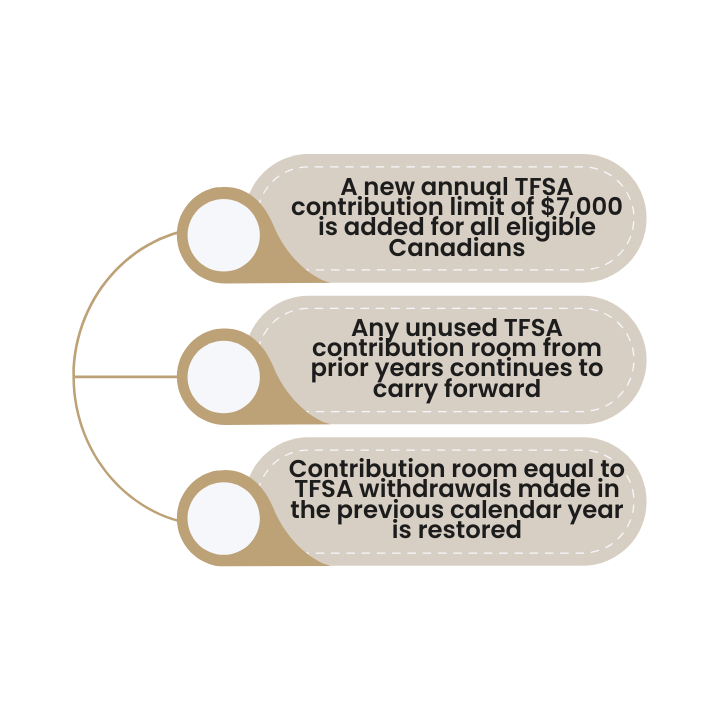
On January 1, three things happen for a TFSA:
In practical terms
Your total TFSA contribution room on January 1, 2026, is the sum of:
Your unused contribution room from prior years
$7,000The new room for 2026
Any amounts you withdrew from your TFSA during 2025
This is also a natural point to reassess whether new savings should go into a TFSA or an RRSP. If you’re unsure which makes sense for your situation, see: RRSP vs TFSA: Which Should You Use?
For official definitions and CRA guidance, refer to: Tax-Free Savings Account (CRA)
Why January 1 Is Still a Useful Reset Point
The January 1 TFSA reset is valuable because it:
January TFSA Reset: A Simple Checklist
Know Your Contribution Room (Approximately Is Fine)
You don’t need a perfect spreadsheet. You do need a reasonable estimate based on past contributions, past withdrawals, and the years you’ve been eligible.
Decide Whether to Contribute Now or Later
There’s no requirement to act on January 1. Contribute now if you have idle cash and clear intent, stage contributions if cash flow varies, or wait if your emergency fund isn’t solid.
Where New TFSA Money Should Sit in January
Using a TFSA for Cash or Short-Term Savings
For many households, this is the most practical use. A TFSA holding cash keeps interest tax-free, preserves flexibility, and acts as a buffer against uncertainty.
Using a TFSA for Long-Term Growth
Long-term investing inside a TFSA makes sense when your emergency fund is in place, you won’t need the money short-term, and you have a strategy you can stick with.
How the TFSA Fits Into a Family Finance System
The TFSA works best when it’s part of a broader structure alongside emergency funds, RRSPs, and day-to-day cash flow.
In a well-built system:
Emergency funds reduce pressure on investing
RRSPs handle long-term tax deferral
TFSAs provide flexibility across life stages
This is why TFSA decisions often change over time—and that’s normal.
Related guides:
When the system is clear, TFSA decisions stop feeling complicated.
What to Do on January 1 — Based on Your Situation
Rebuilding or Tight on Cash
Don’t rush to contribute. If you do contribute, keep funds accessible and focus on flexibility.
Stable but Undecided
Contribute partially or stage contributions. Use your TFSA as a holding account and revisit later.
Long-Term Focused
Contribute early if cash allows, invest according to a clear plan, and avoid unnecessary tinkering.

The Bottom Line
Your TFSA reset on January 1 isn’t a deadline. It’s a planning checkpoint. You don’t need to maximize your TFSA immediately. You need to position it correctly—aligned with your cash needs and integrated into your broader plan.
Before making your January decisions, review TFSA Mistakes to avoid common pitfalls that derail TFSA strategies—like over-contributing, withdrawing strategically, or mixing up TFSA and RRSP rules.
Frequently Asked Questions
The January 1 TFSA reset gives every eligible Canadian resident $7,000 of new room in 2026 — the third consecutive year at that limit. Your total available room is that $7,000 plus any unused room carried forward from previous years, plus any amount you withdrew from your TFSA during 2025.
No. There’s no deadline or requirement tied to January 1 — unlike an RRSP, a TFSA has no annual contribution deadline. Contribute now if you have idle cash and clear intent, stage contributions through the year if cash flow varies, or wait if your emergency fund isn’t solid yet.
Yes. Any TFSA contribution room you don’t use in a given year carries forward indefinitely — there’s no expiry. If you’ve never contributed and were 18 or older in 2009, your cumulative room could be as high as $109,000 in 2026.
Not right away. A TFSA withdrawal is only added back to your contribution room on January 1 of the following calendar year — not immediately, and not later that same year. Re-contributing the withdrawn amount before then counts as a new contribution, and can trigger a 1% monthly penalty if you no longer have room available.
It depends on your income, timeline, and whether you expect to be in a higher or lower tax bracket in retirement. A TFSA generally suits short-to-medium-term flexibility, while an RRSP tends to make more sense for higher earners focused on long-term tax deferral. See our full RRSP vs TFSA breakdown for a direct answer based on your situation.
Nothing negative happens to your account — TFSA room simply carries forward and accumulates for future years. The only cost is opportunity: money sitting outside the TFSA doesn’t benefit from tax-free growth in the meantime.
Not sure whether your TFSA, RRSP, or FHSA should come first this year? Read FHSA vs TFSA vs RRSP: Which Should You Use? — a clear breakdown of which registered account fits your income, timeline, and goals.